 State-funded normal schools—designed to provide standardized training of teachers—first emerged in Massachusetts in the early 19th century. By the 20th century, they had morphed into state colleges. In the 21st century, they all became state universities.
Old Deluder Satan
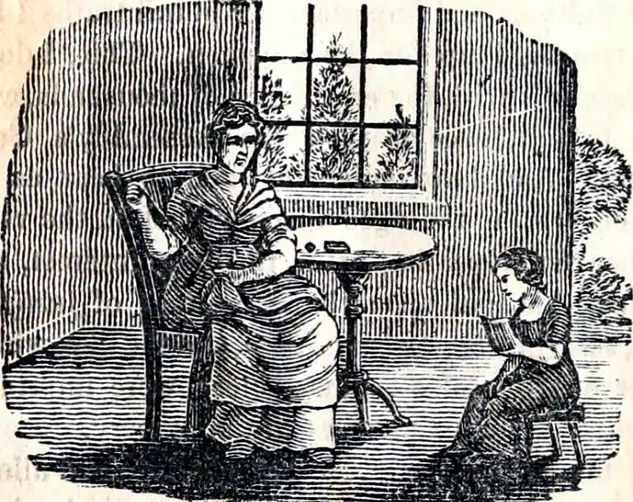
Massachusetts has been a leader in education since the English founded Plymouth Colony in 1620 and the Massachusetts Bay Colony in 1630. Initially, parents or skilled tradesmen gave lessons so children and apprentices could read the Bible and colonial laws. Notably, the Old Deluder Satan Act (1647) in Massachusetts Bay ordered that towns with 50 or more households had to hire a schoolmaster. He taught white boys aged 5 to 7 years – including apprentices and servants – to read and write. These town/petty schools were the forerunner of the common school movement of the early 19th century.
Funding came from a mixture of parental tuition payments, nonmonetary contributions (e.g., firewood for heating) and town revenues. Girls, Black children and some very poor boys were excluded. The law also required towns with 100 or more households to create Latin grammar schools to prepare privileged white boys for ministry and law careers.
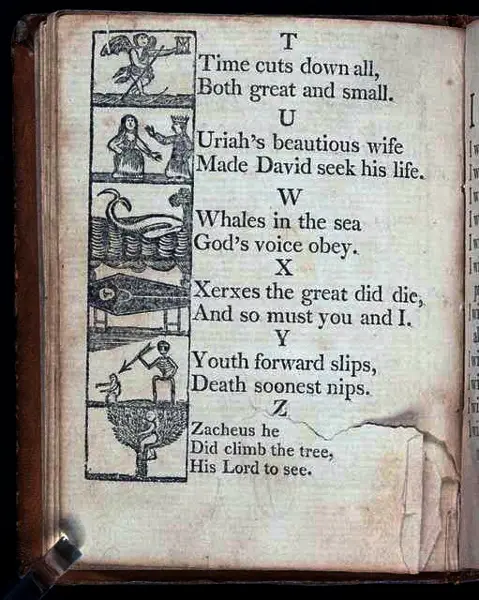
The New England Primer.
In the 18th century Vermont began to require school districts that educated both boys and girls. By the early 19th century Samuel Reed Hall (1795-1877) had observed that elementary schools were in deplorable condition. The school districts were often poorly funded by the town. Thus, the school buildings were often overcrowded and inadequately maintained. More importantly, the teachers were poorly paid and insufficiently prepared to teach basic reading, writing and arithmetic.
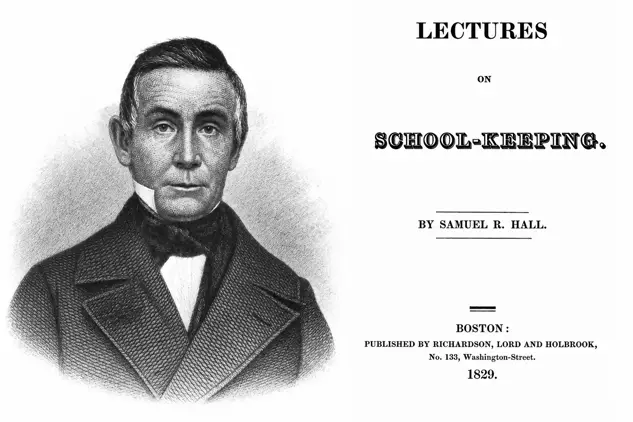
The First Normal Schools
Having observed these conditions, Hall, a Congregational minister, decided to create the first private normal (model) school in the U.S. to train teachers. He opened his Columbian School on March 11, 1823 (incorporated that November as Concord Academy). He offered instruction in several subjects to prepare students for teaching, a practice teaching experience, and lectures on “the science of teaching and the mode of governing a school with success.” In 1829, Hall wrote Lectures on School-Keeping, which became the first book on school management and the training of teachers in America. Hall left for Phillips Academy in Andover, Mass.—the second private normal school—in 1830. Concord Academy closed in 1832.
In Massachusetts, James G. Carter (1795-1849), Father of the Normal School, was well aware that town schools suffered from the same conditions as in Vermont. He wrote an Outline of a Plan of an Institution for the Education of Teachers in 1825. He then petitioned the state Legislature in 1827 for a normal school, but it was rejected. By 1837 Carter—now a state legislator—succeeded in drafting the first-in-the-nation state board of education. Horace Mann (1796-1859), a progressive state legislator, became the first secretary.
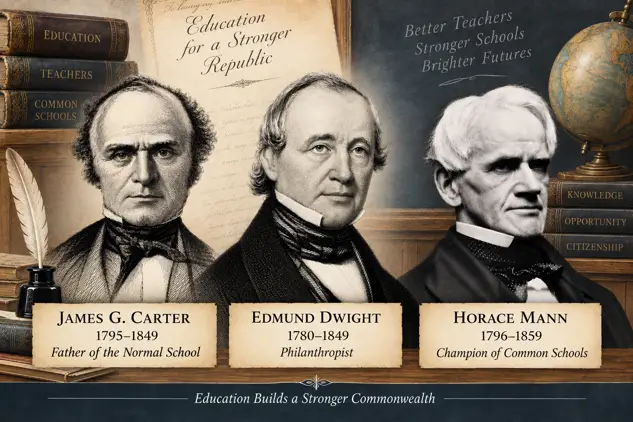
Horace Mann immediately championed the Common School Movement. He said all children should receive a basic, standardized, elementary school education from trained teachers. He also believed that common schools should mainly be funded through local property taxes, not parental tuition. Thus, state oversight (e.g., common curriculum and textbooks) would be needed to ensure that these goals were met. More broadly, common schools would provide more educated workers for the future growth in industrial development.
Coed Normal Schools
In 1839 the Massachusetts Legislature approved the creation of the first three public normal schools in the United States for training teachers. Four men were primarily responsible for the achievement: Carter, then a state legislator; Mann, the education secretary; Rev. Charles Brooks, a noted advocate; and Edmund Dwight, a Boston merchant. Dwight gave a gift of $10,000 that matched the state appropriation.
The first publicly funded normal school opened on July 3, 1839, in Lexington with three female students. The second opened on Sept. 14, 1839, in Barre (near Worcester), and the third opened on Sept. 9, 1840, in Bridgewater (south of Boston). The latter two opened as coeducational entities.
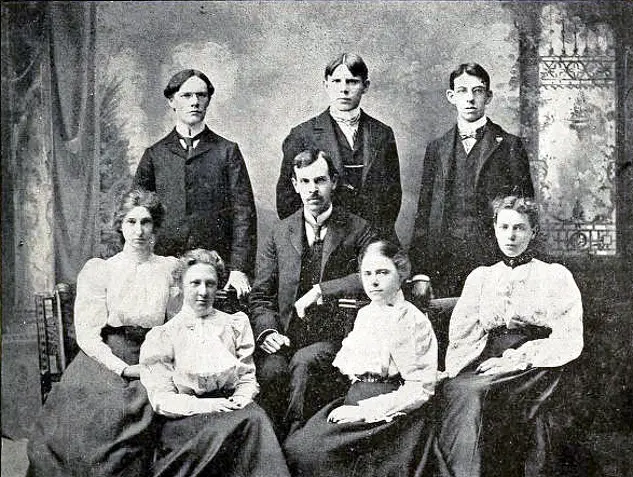
Bridgewater State Normal School Class of 1899
Both male and female students (who had to be 16 or 17 years of age) originally received one year of training. The curriculum included instruction in basic subjects (e.g., algebra, chemistry) and moral principles. They were required to teach in a model school, given their additional training in how to teach and deal with child behavior. Upon graduation, they received a certificate attesting to their competence. Female graduates, then and afterwards, outnumbered males. Notably, Lexington produced the first Black graduate, Mary Elizabeth Miles, in 1843.
Growth, Despite Opposition
These early normal schools encountered significant opposition. Taxpayers, especially the wealthy, objected to state funds being used for this purpose. Religious groups (e.g., Irish Catholics) argued against their Protestant approach to education. Various educators did not like the new teaching methods and state control of local schools.
By 1900 Massachusetts had 10 normal schools. After Bridgewater, state normal schools appeared in Salem (1854), the Massachusetts Normal Art School in Boston (1873), Worcester (1874) and Fitchburg (1894). In 1897 normal schools were created in Hyannis, Lowell and North Adams.
Boston created the only municipal normal school in Massachusetts. In 1852 the Girls’ High School opened as a normal school, while also continuing to expand its academic courses. The training department eventually separated from the rest of the high school in 1872 to become the Boston Normal School. By 1960 it had transitioned into Boston State College.
State-Run Normal Schools Spread
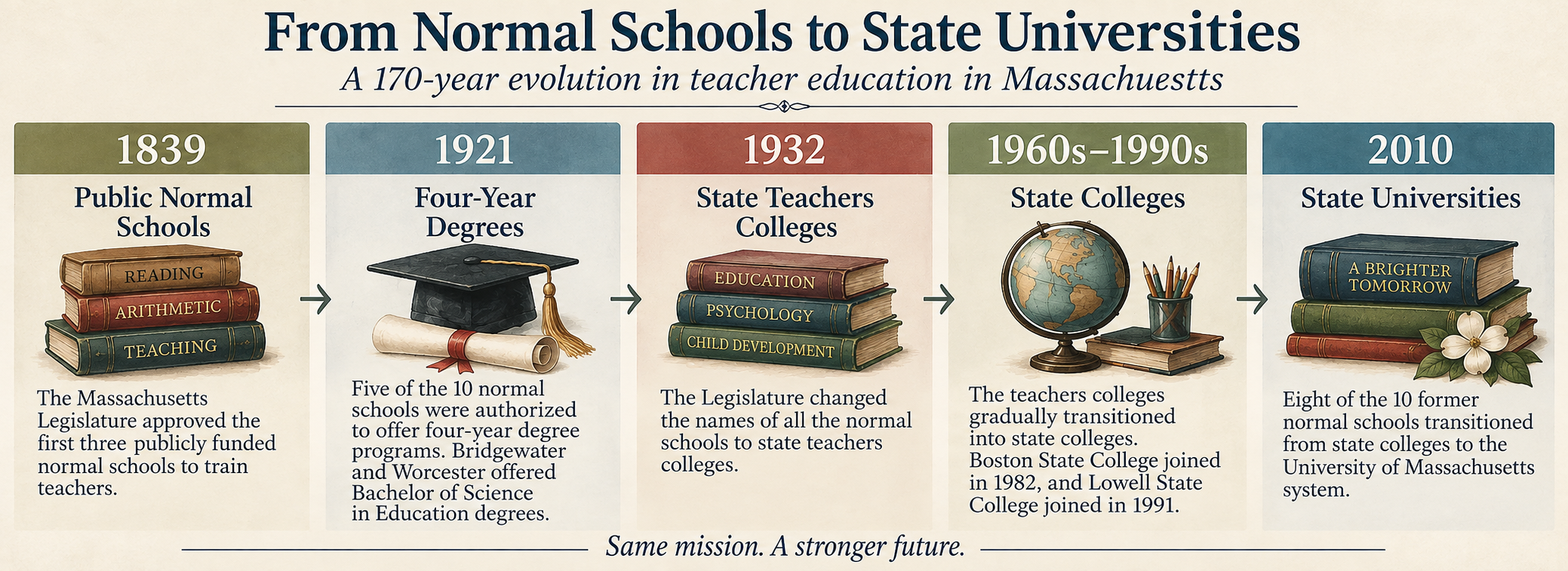
In 1921 Massachusetts authorized five of its 10 normal schools to offer a four-year degree program. Bridgewater and Worcester offered Bachelor of Science in Education degrees.
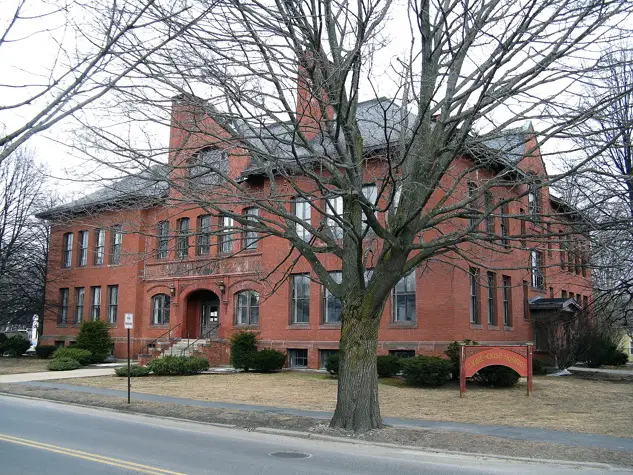
The State Normal Training School in Westfield
Notably, Barre Normal School, suspended in 1841-42, subsequently reopened as Westfield Normal School in 1844. Lexington Normal School became Framingham Normal School in 1853, Hyannis Normal School closed in 1944. In 1932 the Legislature changed the names of all the normal schools to state teachers colleges.
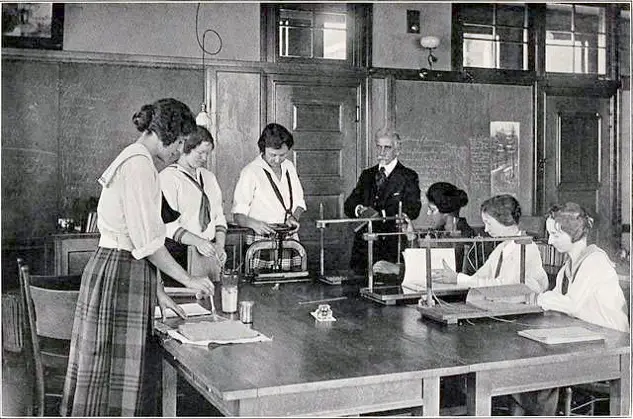
Instructors and students at the State Normal School at Salem.
In October 2010 eight of the 10 normal schools transitioned from state teachers colleges to the University of Massachusetts system. Boston State College had already joined in 1982, while Lowell State College joined in 1991.
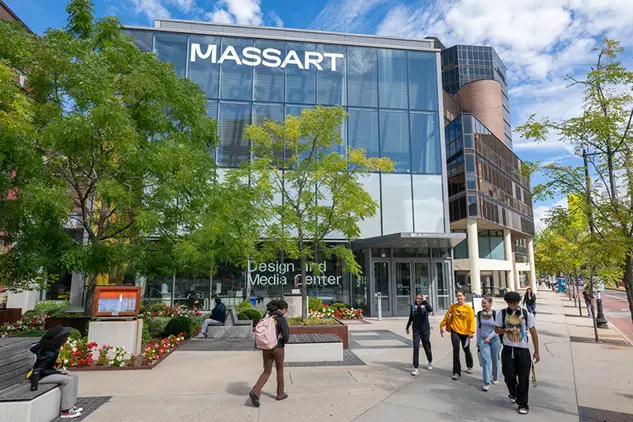
MassArt Design and Media Center, once Massachusetts Normal Art School
State-run normal schools did appear elsewhere in New England. Connecticut had its first school in 1849, Rhode Island in 1854, Maine in 1864, Vermont in 1866 and New Hampshire in 1871.
Edward T. Howe, Ph.D. is Professor of Economics, Emeritus, at Siena University near Albany, N.Y.
Hundreds of curious facts and surprising stories from all six New England states.
Images: State Normal Training School in Westfield, By John Phelan – Own work, CC BY 3.0, https://commons.wikimedia.org/w/index.php?curid=9546233. New England Primer courtesy Library of Congress. Collage of three education advocates and timeline by ChatGPT. Bridgewater State Class of 1899 Bridgewater State Normal School. (1899). The Normal Offering 1899.
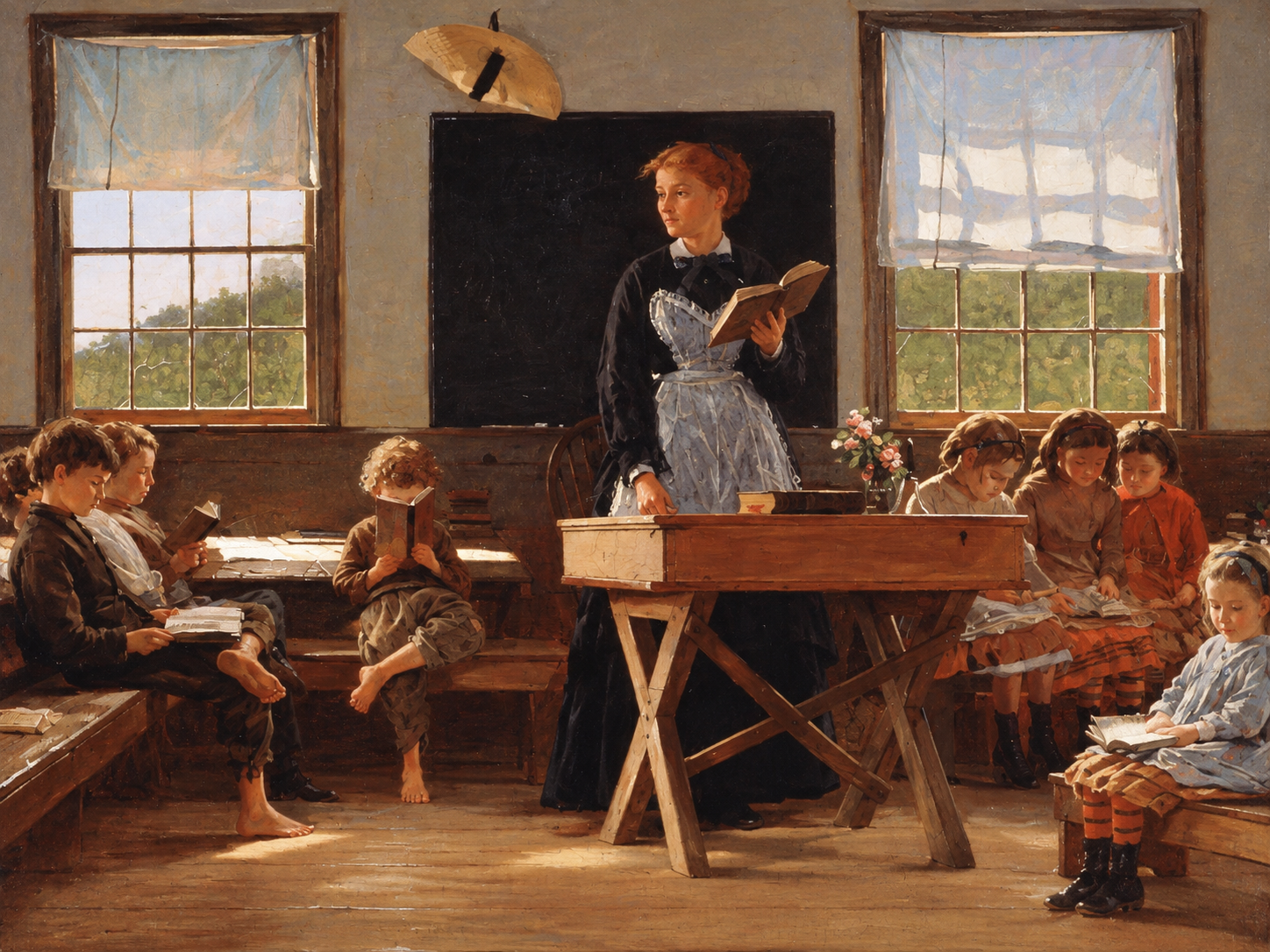
Retrieved from: https://vc.bridgew.edu/yearbooks/1. MassArt By Melissa Ostrow – Photographer, CC0, https://commons.wikimedia.org/w/index.php?curid=177603933. Featured image by ChatGPT, adapted from Winslow Homer’s “The Country School.”

1 comment
Jeffrey Boutwell, author of “George Boutwell: Radical Republican and Champion of Democracy,” points out that Boutwell, Massachusetts governor from 1851 to 1853, and then secretary of the Mass Board of Education from 1855 to 1860, was a lifelong champion of equal public education, a cause he continued to champion in the US Congress in the 1860s following the abolition of slavery and the emancipation of 4 million Black Americans.
Comments are closed.