
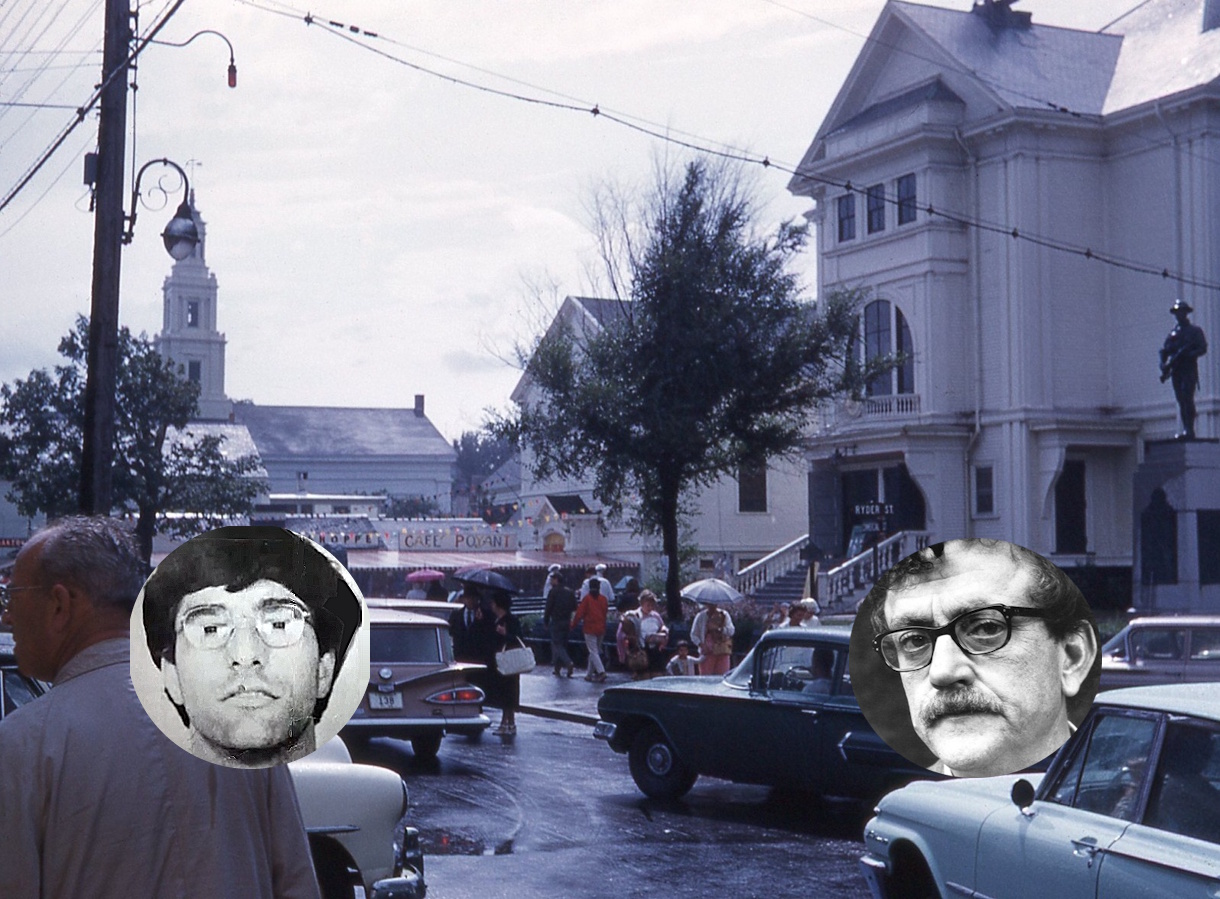
 Provincetown in the late 1960s was a mecca for outsiders: young hippies, homosexuals of all ages and Portuguese Americans. Tony Costa fit two of those categories: a Portuguese-American hippie who preached peace, love and enlightenment to a small cult of followers who called him “Sire.”
To most people, he seemed quiet and gentle, well-spoken and neat. Provincetown police viewed him as a drug dealer and a thief, but they paid him to rat out rival drug dealers. That caused some embarrassment when they arrested Tony Costa for the brutal murders of four young women.
Tony Costa fascinated Kurt Vonnegut, a writer on the brink of fame with his antiwar novel “Slaughterhouse-Five.” The book would make him a literary hero to young readers—especially the young hippies drawn to Provincetown. Tony Costa’s murder spree came as a shock, precisely because it seemed to show the utopian promise of the 1960s was just an illusion.
Tony Costa
Antone Costa at the time of his arrest in February 1969 was a recently divorced 24 year old. He stood 6 feet 4 inches tall, with a mop of dark hair, sideburns and granny glasses. He devoured books on taxidermy, at which he was adept. Costa also read the German writer Herman Hesse, popular among American hippies. Hesse’s novel “Steppenwolf” spoke to him about a man divided between a higher self and a savage one.
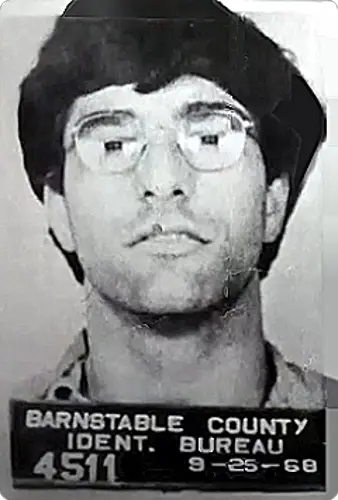
Tony Costa
Costa was born on Aug. 2, 1944, in Cambridge, Mass. His father died during World War II rescuing another sailor. His mother quickly remarried and had another son, Vincent Bonaviri. He first got into trouble at 17, when he broke into a neighbor’s house in Somerville, Mass., and attacked a teenaged girl.
His mother begged for leniency, so instead of juvenile detention he went to stay with a relative in Provincetown.
He enrolled in Provincetown High School and began having sex with an eighth grader. They wanted to marry, but her mother wouldn’t let her. So Tony deliberately got her pregnant and he married his 14-year-old pregnant bride.
Costa drifted west to San Francisco’s Haight-Ashbury district, then back again to Provincetown. He worked odd jobs—construction, carpentry, anything for rent—and dealt drugs on the side. In the woods near a cemetery in Truro, the next town, he cultivated a hidden marijuana patch.
Tony Costa Kills Sydney Monzon
In late May of 1968, he tried to persuade one of his followers, the waifish Sydney Monzon, to help him rob pharmaceuticals from a doctor’s office. Sydney left her bicycle outside the A & P where she worked and climbed into Tony’s Oldsmobile.
After robbing the doctor’s office, Tony drove Sydney to his marijuana patch in the Truro woods. They buried the stolen drugs. When they were almost finished, Sydney walked back to the car. Tony grabbed a large knife he had hidden in the woods and approached Sydney from behind. When she turned around, he stabbed her in the shoulder, then again and again. He then buried her mutilated body in the woods.
Susan Perry
Another slight, teenaged girl came into Tony’s orbit later that summer. He met 17-year-old Susan Perry while riding his bicycle. He stopped to chat with her in front of the Lobster Pot restaurant. She told him she wanted a way out of Provincetown. Labor Day approached and the town would empty out.
Tony told Susan he had a job building a home in the Boston suburb of Dedham. He offered to let her stay with him at his apartment.
Susan took him up on his offer, bringing her belongings with her in an Army surplus duffel bag. They had a sexual relationship. One day while hanging out in the apartment, he gave Susan some LSD. Then he grabbed her by the hair, dragged her across the carpet into the bathroom, where a knife rested on the counter. He called it his pig stabber. Tony plunged the knife into Susan’s chest, then did it again and again.
When life left Susan, he had sex with her dead body. Then he cut off her breasts, her genitals, severed her head and cut out her heart. He put some of her dismembered body into her bag, the rest in a plastic bag, and lugged it down to his Oldsmobile. Then he drove to the Cape and buried Susan near Sydney.
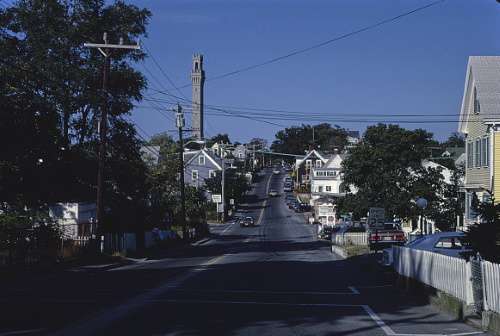
Provincetown. The Pilgrim monument is in the background.
Tony Costa Kills Again
On a cold January day, two visitors arrived in Provincetown: Patricia Walsh, a second-grade teacher from Providence, and her friend Mary Anne Wysocki, a college student. They didn’t belong to the counterculture—just young women looking for an adventurous weekend.
They’d had the bad luck to reserve a room in a $5-a-night room at a boardinghouse on Standish Street. Tony Costa rented a room there as well.
When the young women arrived in Pat’s baby blue VW Beetle, Tony helped them with their luggage. That night they had a few beers at the Fo’csle and then the Pilgrim Club nearby. Upon their return to the room, they found a note on the door: Tony asking them for a ride the next morning.
The next morning they met up with Tony again. Tony persuaded them to take him to a spooky old cemetery in the Truro woods. He left Pat and Mary Anne chatting in the woods while he went to dig up his weapons—a .22 caliber pistol with a pearl handle and a knife with a 12-inch blade.
Tony Costa walked back to the young women. He reached into his pocket for his gun and shot Pat Walsh in the back of the neck. Mary Anne started to run away from him. He fired twice, missing her, but a third bullet penetrated her skull. She fell, mortally wounded. Tony stood over her and shot her through the left side of her brain.
What followed, in Vonnegut’s words, was pitiful and horrible and sickening.
He had sex with both their still-warm bodies. Then he hung them from a tree and began to cut them apart. Two hours later he finished his butchery, and he buried them in shallow graves near Susan Perry and Sydney Monzon.
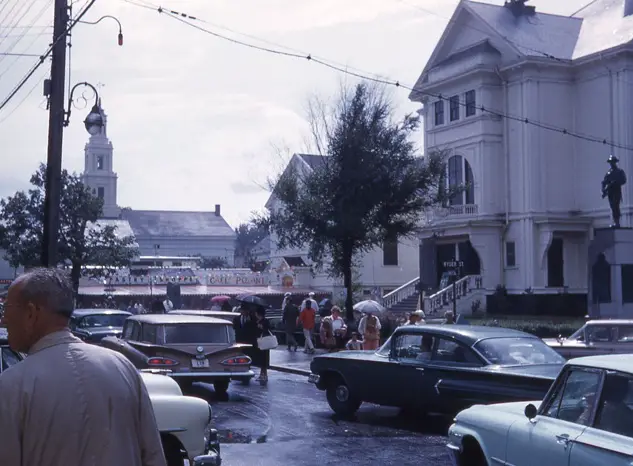
Provincetown in 1961
Mistakes
He had worn a second set of clothes under his now-bloodstained shirt and pants. So he stripped off the bloody outer garments and buried them. Then he went over to Pat’s VW Beetle, got in and drove it to a small clearing and left it there.
A mistake.
He hitchhiked home to his room on Standish Street.
The next morning, a local spotted the abandoned VW in the clearing—a funny place to park a car. So he went to the police station to report it. A police officer investigated and found someone had visited the car and put a message on it: “Engine Trouble. Will Return.” The local said the car had no note attached when he first spotted it.
But no one had reported the vehicle stolen. The police officer shared the information with Barnstable County over the radio, then went home.
Missing Persons Reported
Unlike Sydney Monzon and Susan Perry, Mary Anne and Pat had strong ties to their family and friends. Their parents and boyfriends, increasingly frantic, reported them missing to the Provincetown police.
A student at Providence College had run into Mary Anne at the rooming house on Standish Street. When news of Mary Anne’s disappearance reached the college, he told his roommate. The roommate told a friend of Mary Anne’s, and soon the Provincetown police followed the lead. They visited the rooming house, where the landlady told them about Tony’s note asking for a ride to Truro. The police then searched the room that Tony had just cleared out. They found Mary Anne’s hair dryer and Pat’s sweater.
When they spoke to Tony’s mother, she refused to cooperate.
Next stop: Truro. The Provincetown police told the Truro police chief about the missing women who’d driven a light blue Volkswagen. The police chief berated them for failing to share the information about the missing women. Then they went to find the Volkswagen in the clearing. It had disappeared. But they did find a torn sales slip made out to Patricia Walsh.
On Feb. 8, 1969, a search party of 75 men searched the woods near the spot where the car had parked. They found the mutilated remains of an unidentified victim and a green Army surplus duffel bag.
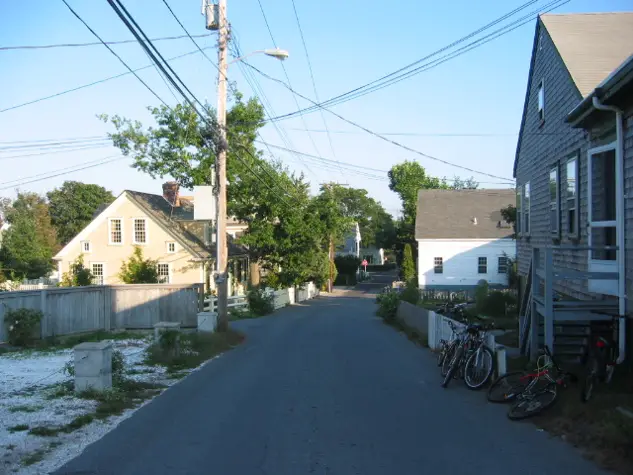
A residential street in Provincetown
Tony Costa On The Run
Costa knew the car could get him into trouble. So he drove it to Burlington, Vt., and put it into storage. He then took a bus to Provincetown. His mother told him the police wanted to speak to him. They wanted to know about the missing women.
He told the police a pack of lies. He said Pat sold her the car because she needed to go to Canada for an abortion. Pat gave him the car because she owed him money for heroin he’d sold her. Then he said they’d gone to California for an abortion.
The police didn’t believe him, but they let him go. Tony went to Boston to stay with his half-brother. He didn’t go far enough. State troopers found the bodies of Pat Walsh and Mary Anne Wysocki. Police arrested him at his brother’s apartment.
Kurt Vonnegut and Tony Costa
Ever since Kurt Vonnegut read the news of a dismembered body in the Truro woods, he’d followed the story closely. A 47-year-old writer, he lived less than 40 miles away in an old farmhouse in Barnstable Village.
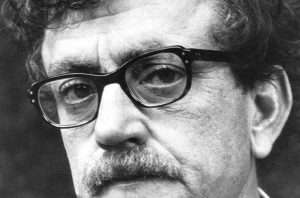
Kurt Vonnegut
He’d struggled for 20 years to complete his masterpiece, “Slaughterhouse Five,” and on March 31, 1969, it appeared in print. In it, Vonnegut fictionalized his experience as a prisoner of war during the firebombing of Dresden. He had had to recover the mutilated bodies of bombing victims, pulling corpses from collapsed buildings and cellars.
When Vonnegut read about the arrest for the murders, the name “Tony Costa” rang a bell. His daughter Edie had mentioned meeting him. She had spent the summer in Provincetown on her own, learning to paint with oils. Costa could have lured Edie to his marijuana patch.
Vonnegut called Edie, then at college in Indiana. She said she’d barely known Tony Costa, and it may even have been someone else she met.
That didn’t matter. He told the editors of Life magazine that his daughter knew Tony Costa, that the killer might have lured his daughter to his marijuana patch in the Truro woods. Life gave him the assignment.
A Maniac Loose
Vonnegut immersed himself in Provincetown. He questioned the hippies about what drug could cause Tony Costa to murder. The universal answer: Speed.
Vonnegut’s story about Tony Costa appeared under the headline, “There’s a Maniac Loose Out There.”
In it, Vonnegut described a blandness to people’s reactions to the murder. The blankness, he wrote, was a failure to imagine why anybody would want to chop up four harmless girls.
He interviewed the district attorney prosecuting Costa, Edmund Dinis. “He seemed bleakly open to any sort of information from young people which would allow him to understand this young people’s crime,” wrote Vonnegut.
Vonnegut told him his daughter had known Costa. Dinis asked what she had said about him. Vonnegut told the prosecutor.
Edie had said, “‘If Tony is a murderer, then anybody could be a murderer.”
“Mr. Dinis sat back, disappointed. What he had hoped to hear, I guess, was something enlightening about the culture of the hippies, who are so numerous in Provincetown—maybe talk about drugs.”
The Tony Costa Murders Redux
Having witnessed mass death in another time, Kurt Vonnegut suggested that the Tony Costa murders might reflect the cultural moment—but then, perhaps all murders do.
He reminded his readers that Cape Cod had had other drug-fueled serial killings—by a nurse named Jane Toppan. In the summer of 1901, she killed Alden P. Davis, his wife and two daughters with morphine and atropine. She later confessed to killing 27 other people.
“It might be argued that Jane Toppan was, in her own way, responding to the corporate greed and the militarism and the murderousness and corruption of her times,” wrote Vonnegut.
A jury found Tony guilty of the two murders. The judge sentenced him to life in prison. He died, apparently a suicide, on March 12, 1974.
Images: Tony Costa mug shot By Barnstable County Identity Bureau, Massachusetts, U.S. – crimedocumentary.com broadcast of Investigation Discovery Series Twisted – Cape Cod Casanova (S06E02) 2014, minute: 7:20, edited screen capture, Fair use, https://en.wikipedia.org/w/index.php?curid=57363598 Provincetown in 1961 By Daniel1901100 – Own work, CC BY-SA 4.0, https://commons.wikimedia.org/w/index.php?curid=74076690
With thaks to Helltown by Casey Sherman.