 A virtual unknown from Northern New England invented both the steamboat and the internal combustion engine. Sometime before his death in 1843, Samuel Morey even built a primitive automobile.
Throughout most of his life, Morey moved between opposite sides of the Connecticut River—living in Orford, N.H, and Fairlee, Vt. And for nearly as long, he bitterly accused American icons Robert Fulton and Robert Livingston of stealing his steamboat design.
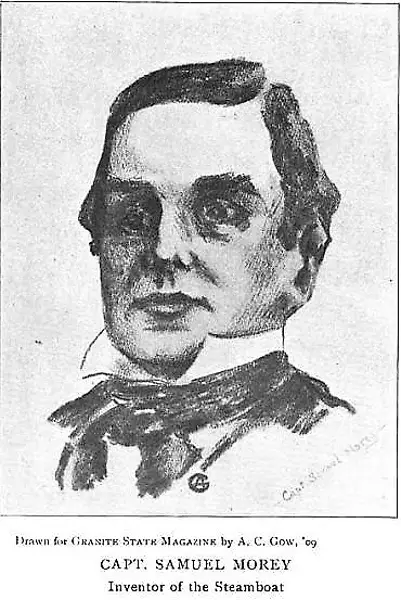
Whenever Fulton’s name came up in conversation, Morey would spit:
“Curse his stomach, he stole my patent.”
For two centuries, history largely favored Fulton, who swore on his patent applications that his steamboat was entirely his own creation. But a remarkable archival discovery at Dartmouth College in 2004 vindicated the New England tinkerer. They revealed lost patents that prove Morey was years ahead of his time, not just on water, but on land.
Samuel Morey
Born on October 23, 1762, in Hebron, Conn., Samuel was the second of Israel and Martha Palmer Morey’s seven chldren. In 1766, the family moved to Orford, N.H., only the second family to settle in the frontier town.
His father, Israel, was a Revolutionary War officer who rose from private to general in the New Hampshire militia. He established Orford’s first store, an inn, a sawmill, two grain mills and a ferry across the Connecticut River.
Growing up alongside his father’s river ferry, young Samuel developed an obsession with watercraft and steam propulsion. Though he had little formal schooling, Samuel’s father educated him at home. He then gained access to the library at Dartmouth College shortly after its founding by Eleazar Wheelock. With a natural mechanical mind, he soon built his own workshop.
At age 30, Morey earned one of the first 50 patents issued in U.S. history—for a steam-driven rotisserie spit, signed by Thomas Jefferson. But his real ambition lay on the water.
A Sunday Morning Breakthrough
Around 1792, Morey decided to test his first steamboat prototype. According to local legend, he chose a quiet Sunday morning when most of the town was at church. That way, he avoided ridicule if his experiment failed.
The tiny vessel could barely hold an engine, a boiler, a stack of firewood and one intrepid passenger–Samuel Morey. Propelled by a stern paddlewheel, he steamed up the Connecticut River from Orford to Fairlee and back at a modest 4 mph.
Some local boys had skipped services that morning and one, Cyrus Mann, later recalled watching Morey’s primitive steamboat.
While other inventors had experimented with steam-driven paddlewheels, Morey’s quiet trial was likely the first successful steamboat run in America. Over the next few years, he refined the design, moving from a single stern wheel to paired side paddlewheels.
The Rivalry: Livingston and Fulton
Seeking financial backers to commercialize his invention, Morey spent three summers in New York and another in Hartford improving his prototype and showing it off.
From there, several versions of the story emerge. In 1818, Morey wrote a letter to a New York legislator giving his versions of events.
Morey described how he spent the next three summers in New York and then one in Hartford improving his boat and seeking investors.
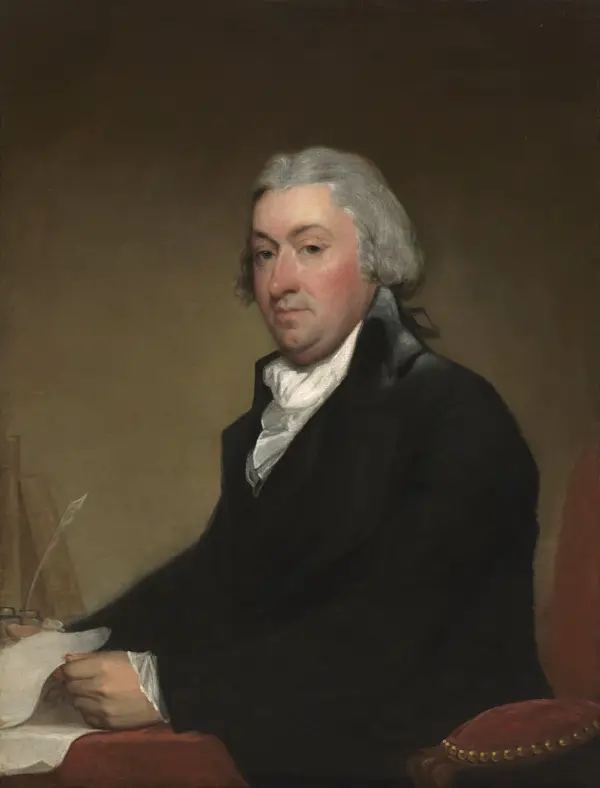
Robert R. Livingston
His work caught the attention of Chancellor Robert Livingston—a wealthy Founding Father, member of the Committee of Five that drafted the Declaration of Independence and a dominant figure in New York politics.
Livingston offered him $7,000 for the exclusive rights to use his technology on the Hudson River. Morey declined the offer. But Livingston then offered him a considerable sum if he could increase the boat’s speed to 8 mph.
Morey ultimately figured out that side-mounted paddlewheels would accelerate the steamboat faster than the stern-mounted device he’d used.
Livingston then turned to Robert Fulton, an ambitious inventor and painter. Livingston had met him in Paris while serving as Minister to France.
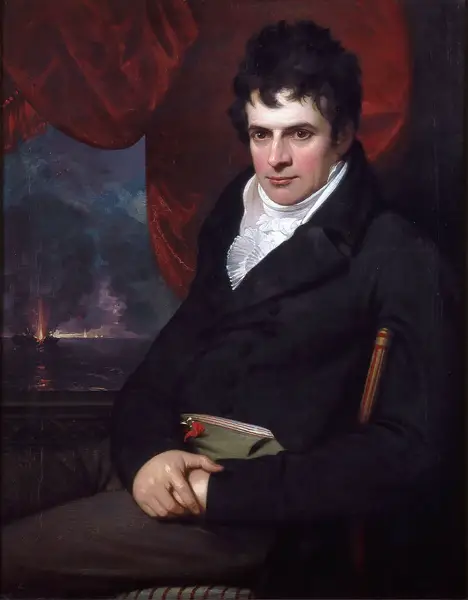
Robert Fulton
In the United States Livingston continued corresponding with Morey, as did Fulton. Livingston even visited Morey’s workshop in Orford as Morey continued to improve his invention. He took out several patents for a steam engine before Fulton did.
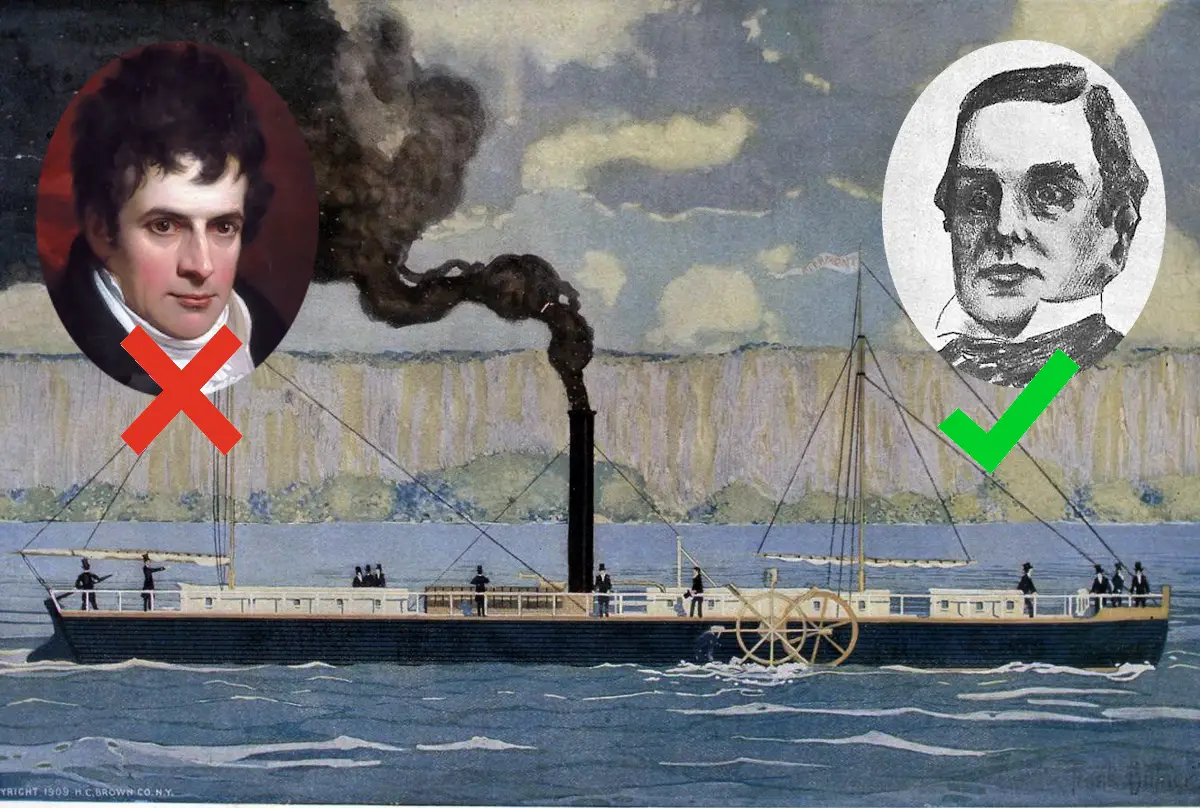
In 1807, Fulton unveiled the Clermont on the Hudson River. The vessel triumphantly steamed from New York City to Albany and back in 62 hours, earning Fulton the enduring fame he sought. Today schoolchildren know of Fulton as the “father of steam navigation.”
Samuel Morey Denounces Fulton
Morey actually rode Fulton’s boat at one point, taking careful note of its machinery. He reported bitterly:
“I fail to detect, after careful examination, any basic difference between Fulton’s ‘invention’ and my own.”
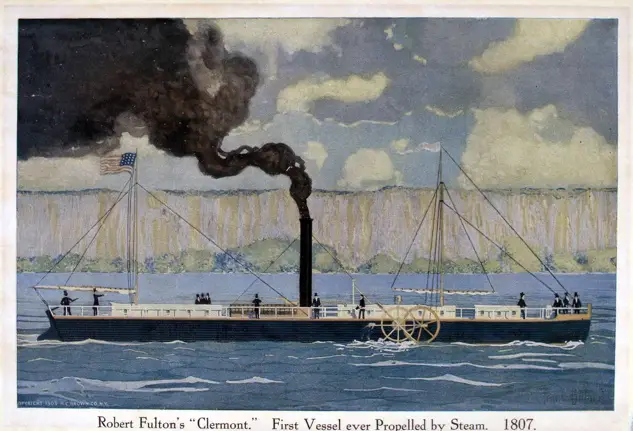
We beg to differ with the caption
Though Morey acknowledged building on earlier pioneers like John Fitch and James Rumsey, he maintained that Livingston and Fulton had gone too far. Morey claimed they feigned interest in a collaboration merely to copy his side-mounted paddlewheel system. In 1811, Fulton officially received a U.S. patent for side-mounted paddlewheels—the very innovation Morey had demonstrated years earlier. Fulton and Livingston were subsequently granted a state-sanctioned steamboat monopoly on the Hudson River (a monopoly later struck down by the U.S. Supreme Court).
Samuel Morey Lives Well
Unlike many unacknowledged inventors who died penniless, Morey fared well financially. Leveraging his vast timberlands and sawmills, he became a prosperous businessman and civic leader in Orford. Known for his generosity, Morey frequently gave away corn to struggling families and quietly paid property taxes for neighbors who couldn’t afford them.
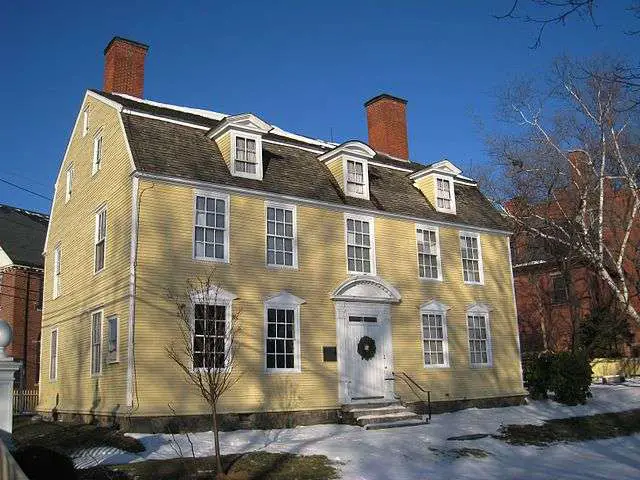
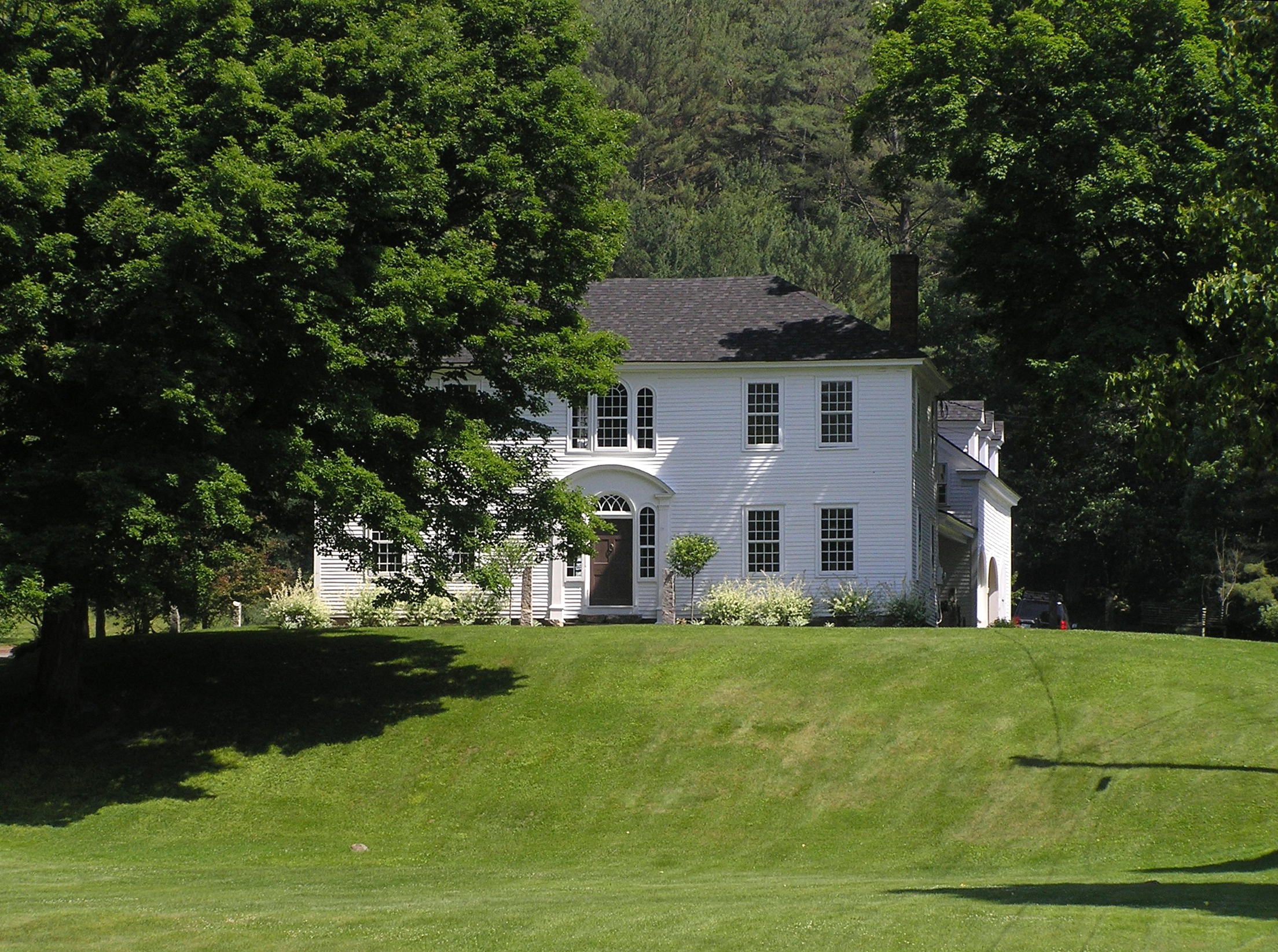
His personal life saw both warmth and heartbreak. He married Hannah Avery in 1785; local legend claims he used her best teakettle for his first steamboat experiments. She willingly gave it to him. They had a daughter, Almira, who married Judge Leonard Wilcox. Morey built a beautiful home for them on “The Ridge”—an Orford street renowned for its grand Federal-style mansions. Tragically, Almira died at just 31, leaving her father heartbroken.
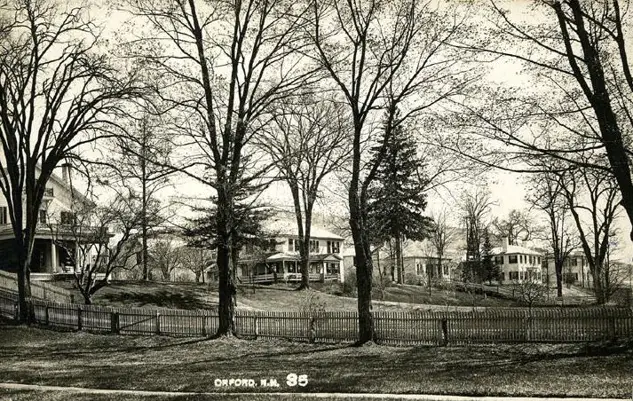
The Ridge, ca. 1912
You can see his house here.
In his later years, Morey built one final steamboat, the Aunt Sally, which he sailed on Fairlee Pond. Legend says he eventually sank the Aunt Sally into the depths of the pond (now renamed Lake Morey) ibefore passing away in 1843.

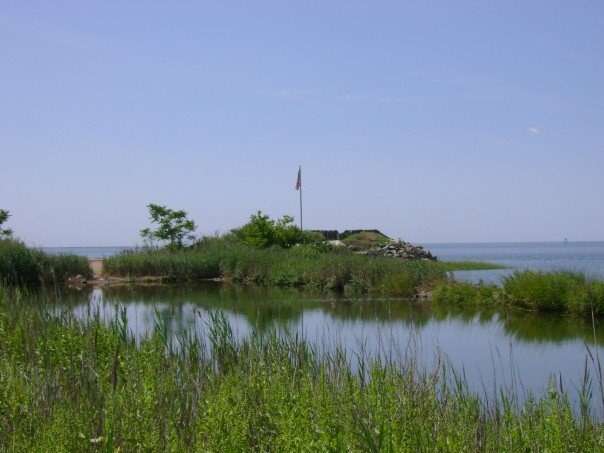
Lake Morey today
Vindication in the Archives
For over a century, official U.S. patent records regarding Morey’s work were thought lost forever due to a catastrophic Patent Office fire in 1836.
Then, in 2004, two patent attorneys browsing the Rauner Special Collections Library at Dartmouth College found Morey’s personal handwritten copies and original documents, including 10 patents signed by George Washington and Thomas Jefferson.
The documents proved beyond doubt that Morey had operated a steam paddleboat in the early 1790s—more than a decade before Fulton’s Clermont.
Even more astonishing was an 1826 patent signed by President John Quincy Adams for a “gas or vapour engine.” Fueled by vaporized turpentine, it was one of the earliest working internal combustion engines in history.
When automotive pioneer Charles Duryea—who launched his car company years before Henry Ford—evaluated Morey’s work, he didn’t hold back:
“He discovered the full germ of the carburetor idea. He was well advanced of his time in many things… Far too little credit has been given this marvelous man, and his advance contribution to the world of science. No one can correctly evaluate the far-reaching influence of this truly remarkable man.”

Orford, N.H., from the west, with the Samuel Morey Bridge in the foreground
Duryea concluded simply: others reaped where Samuel Morey sowed. In 1937, the New Hampshire Legislature officially recognized Morey as the true inventor of the steamboat. The lawmakers named the bridge spanning the Connecticut River between Orford and Fairlee in his honor—a lasting monument over the waters where a forgotten genius first changed the world.
Images: Lake Morey By Ascended Dreamer – Own work, CC BY 4.0, https://commons.wikimedia.org/w/index.php?curid=177792918. The Samuel Morey Bridge and Orford from the west, By Ascended Dreamer – Own work, CC BY 4.0, https://commons.wikimedia.org/w/index.php?curid=177792921. The Clermont, Manuscripts and Archives Division, The New York Public Library. (1787 – 1816). Painting and engraving of Fulton’s vessels Retrieved from https://digitalcollections.nypl.org/items/051cdb00-5941-0137-2d79-0ffba3826762.
With thanks to “The Unsolved Mystery of Samuel Morey,” by Leon Maurer.
 Gershon Marx went to the gallows at Connecticut’s Wethersfield State Prison no May 18, 1905 at the age of 73, leaving behind a wife, children and what the sheriff described as an unknown number of murdered victims.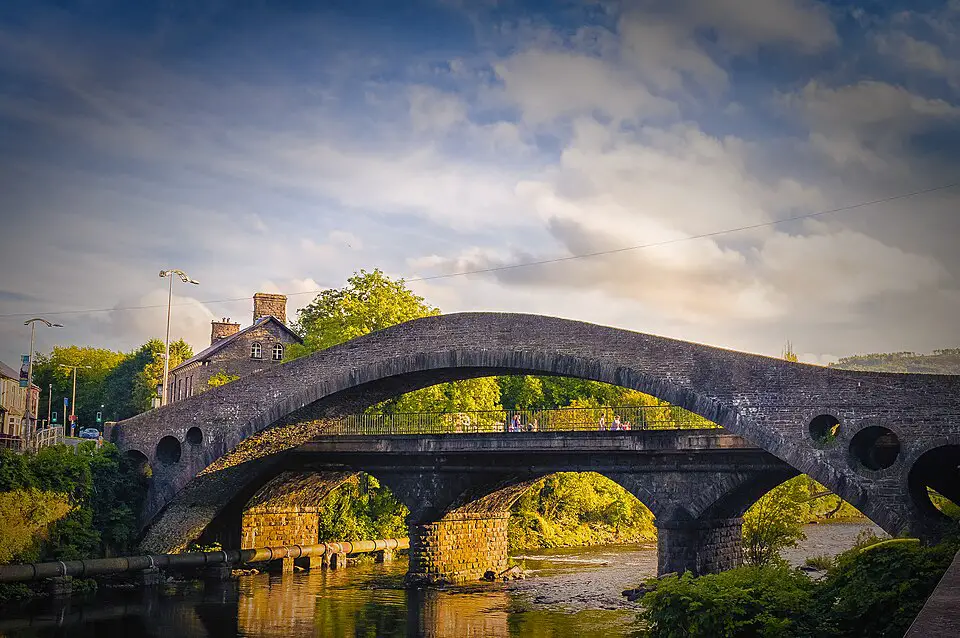

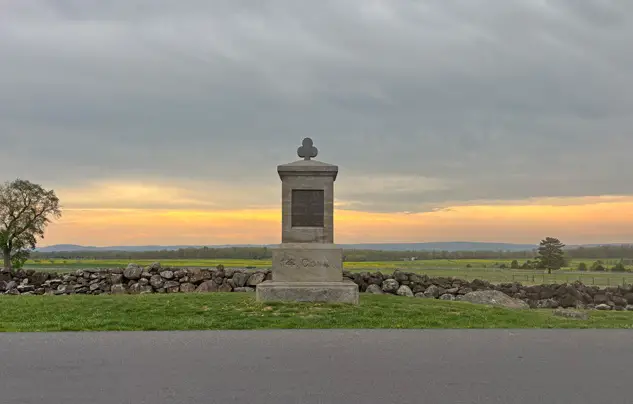
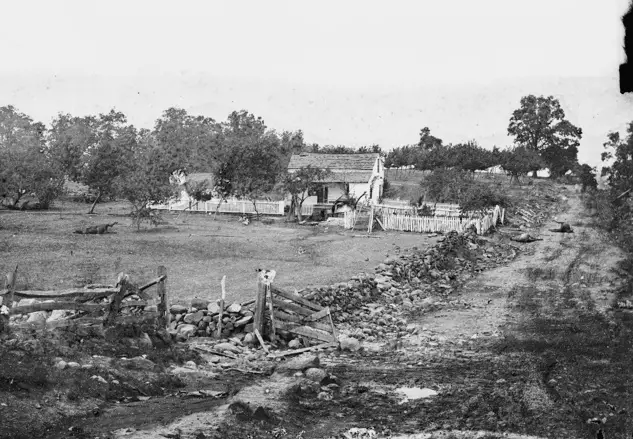
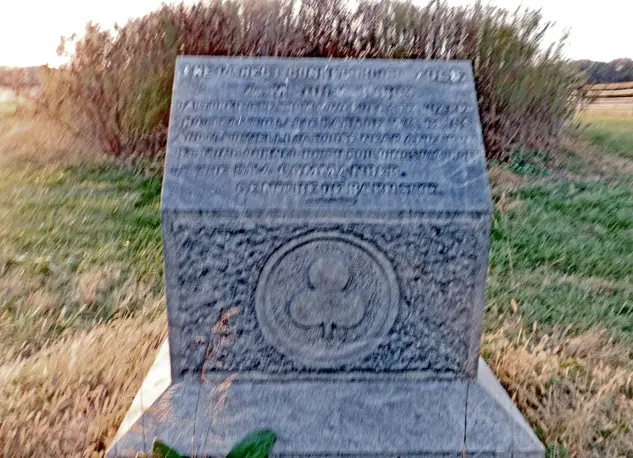
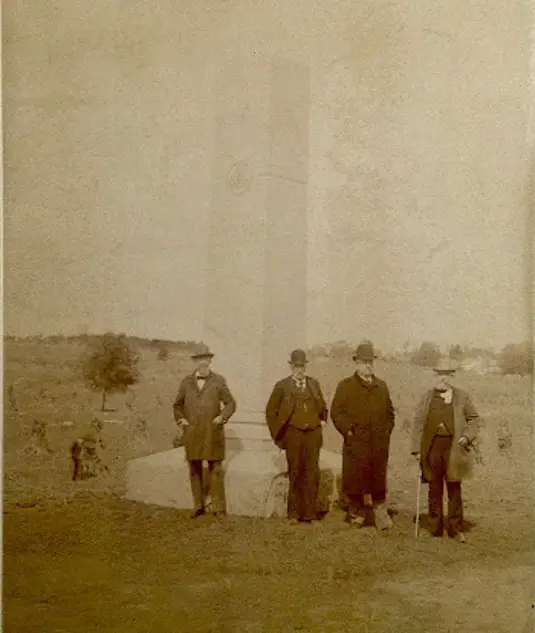
 The monument for the 14th Connecticut at Gettysburg is somewhat plain and doesn’t stand out among the other monuments on Cemetery Ridge. It sits to the right of center of the Union line near the extant Bryant farmhouse and is easily overlooked. But the monument marks the ground held by the regiment during two days of intense fighting.