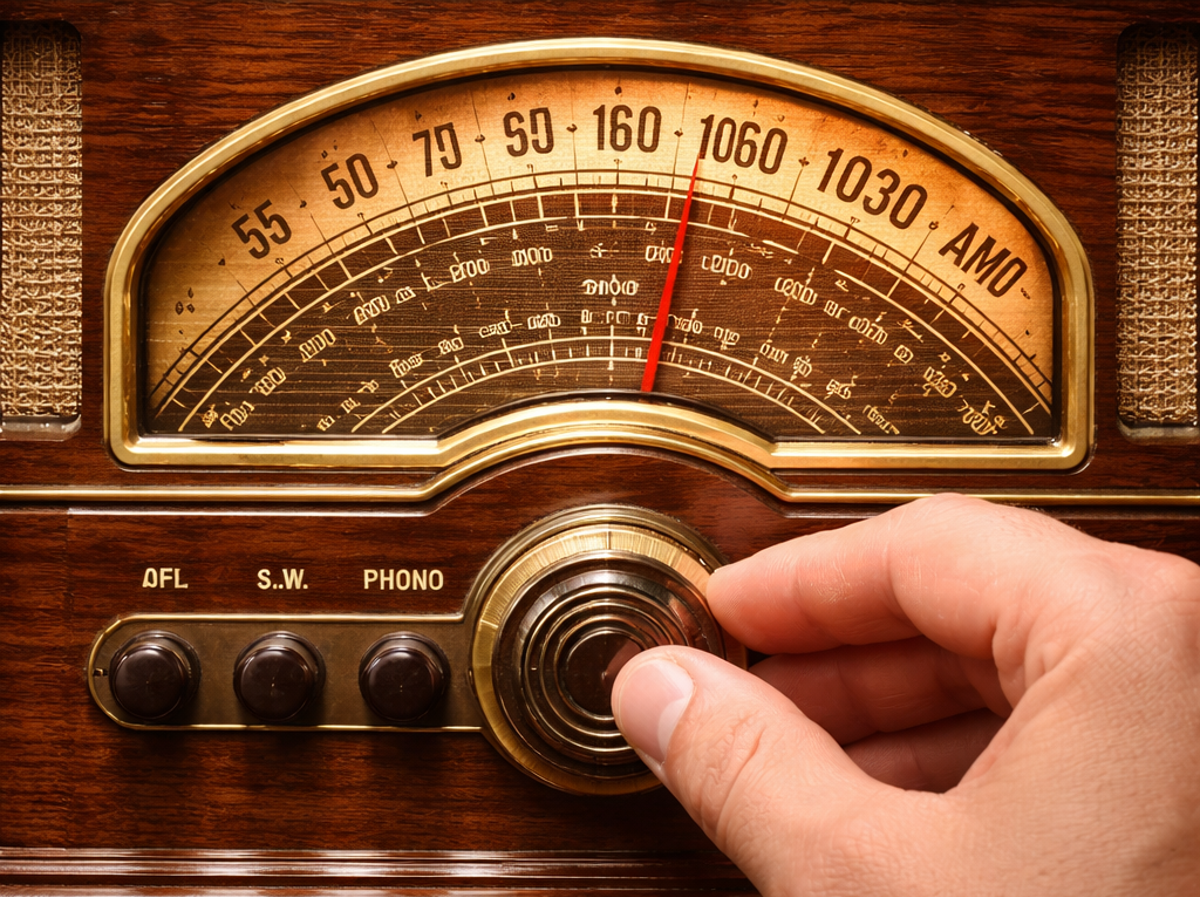
WBZ-AM became the first commercial radio station in New England in 1921. Since its on-air debut, its formats have featured original programming, news, weather, music, sports presentations and talk shows.
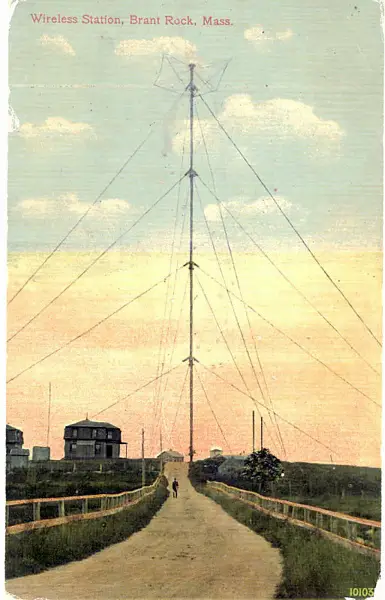
Radio broadcasting in New England began on Dec. 24, 1906 when Reginald Fessenden transmitted his voice and a violin solo from an experimental station in Marshfield, Mass. (Brant Rock), to Atlantic coastal vessels. In 1921 the American Radio and Research Corporation (AMRAD), using the call letters 1XE, began experimental music and information broadcasts during certain evenings from Tufts University in Medford, Mass. By May 21, it was broadcasting on a daily basis, shortly before the arrival of WBZ. AMRAD was granted a “Limited Commercial” (i.e., privately owned broadcaster) license, as WGI, by the U. S. Commerce Department on Feb. 7, 1922. However, it ceased operating on April 7, 1925, after filing for bankruptcy.
More details
Postcard image, from around 1910, of the 420-foot-tall (128 m) Brant Rock radio tower
The Westinghouse Electric and Manufacturing Company (1886) received the first “Limited Commercial” broadcasting license from the U.S. Commerce Department in October 1920. However, after transmitting the Harding-Cox presidential results that November on station KDKA in Pittsburgh, it saw the benefit of expanded public broadcasting for news and entertainment. Thus, it applied for more licenses, starting with what would become WBZ.
WBZ Gets Licensed
On Sept. 15, 1921, the Commerce Department granted a “Limited Commercial” license to Westinghouse for station WBZ, located in East Springfield, Mass. It came under a new category for broadcasting “news, concerts, lectures, and like matter.” It was affirmed in 1923 as the “first broadcasting license” issued by the department.
WBZ-AM began its first broadcast from the Eastern States Exposition, an annual agricultural fair, in West Springfield, Mass., on Sept. 19, 1921. It featured speeches by the Massachusetts and Connecticut governors, news and music. Initially, it broadcast from 7:30-9:30 p.m. weekdays and only aired church services on Sunday. As its hours of broadcasting expanded, the station notably treated its audience on October 16 to the first game of the 1923 World Series at Yankee Stadium. It featured the home team and the New York Giants. Later that same year, it teamed up with the Massachusetts Department of Education to offer adult education courses.
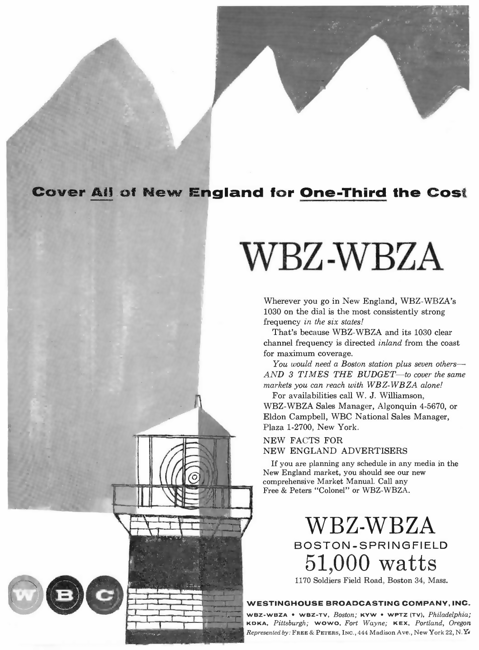
On Feb. 24, 1924, a sister station opened in Boston (WBZA) that extended its broadcasting range. It later secured affiliation agreements with the Boston Herald-Traveler newspapers for more local news coverage. Near the end of 1924, Thornton Burgess began offering his Radio Nature League for child listeners. For sports fans, the first broadcast of a Boston Bruins hockey game came on December 1. On April 14, 1925, the station began broadcasting the first Major League Baseball game in Boston, featuring the Boston Braves and the New York Giants, with the comedian Joe E. Brown as the announcer. The following October, the station started broadcasting Harvard football games. A year later, on Oct. 9, 1926, the first broadcast of the Boston Symphony Orchestra was heard. Significantly, on November 15, WBZ joined NBC, the first radio network.
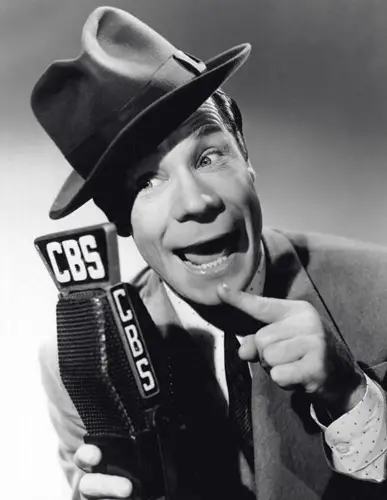
Joe E. Brown announced the first radio broadcast of a baseball game in Boston.
The First Ads
It was not until Jan. 1, 1927 that both WBZ and WBZA began airing advertising promotions through the NBC radio network. Before that, they relied on funds from the sale of radio receivers sold by Westinghouse. Three weeks later, it began transmitting scheduled programming on a daily basis. This included weekly programming by a group of station volunteers, the “WBZ Players” who performed radio dramas with sound effects.
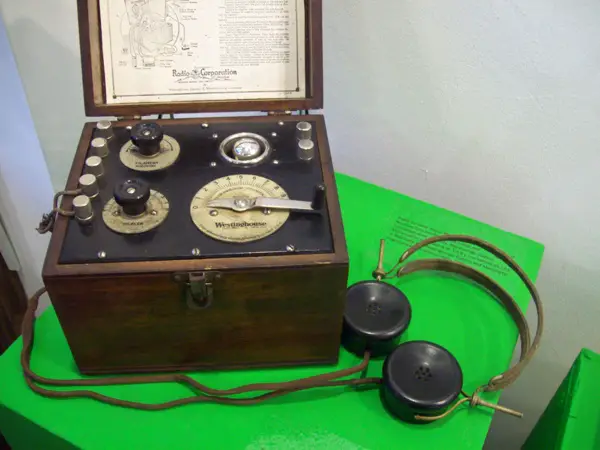
The RCA/Westinghouse Aeriola Senior radio, introduced at the very start of AM broadcasting, 1922-1923
On Feb. 21,1931 WBZ in Springfield and WBZA in Boston switched call letters as Boston became the main market for its listening audience; WBZA stopped relaying WBZ programs in 1962. On April 19, WBZ carried the first broadcast of the Boston Marathon. Then on April 29 a wild incident occurred. A tame lion, brought to the Hotel Bradford station to utter a roar on command, suddenly became extremely agitated, destroyed property and frightened onlookers before police finally overpowered the animal.
Up until the late 1920s, radio announcers used their initials instead of their real names. WBZ wanted the listening audience to focus on the station and not on its announcers. By the early 1930s, the station realized the listeners wanted to identify with its personalities. This became evident when Bradley Kincaid , a noted country and western singer , joined the station in 1935 and used his real name.
After WBZ ended its affiliation with NBC radio in 1956, the station shifted to a music, news and weather format for several decades. Long-time personalities included Carl de Suze, Dave Maynard, Norm Prescott and John Bassett as long-time disc jockeys; Gary La Pierre and Diane Stern as newscasters; and Don Kent and Norman J. MacDonald as weather forecasters. Although the early radio announcers were men, Mildred Carlson had a popular show, Home Forum. It began in October 1930 and continued up to 1960. Her show offered advice on topics tailored to women, especially recipes.
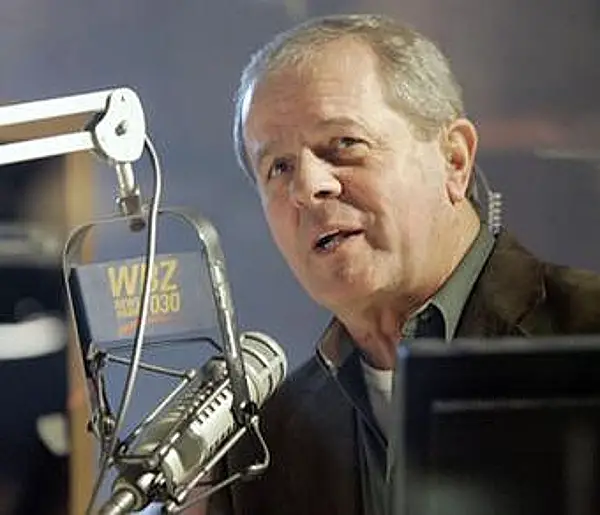
Gary LaPierre
WBZ Gives Up Music
On March 4, 1991, WBZ-AM vowed it would not play music again and would shift to a news-talk format. However, it also continued to broadcast Boston Bruins games from 1995 to 2009 and sports talk shows up to 2001. On Aug. 13, 2009, a reincarnated version of WBZ-FM came into being. Since then, it has broadcast Bruins, Patriots, Celtics and Revolution (soccer) games, when not featuring sports talk programming.
The Westinghouse Electric Corporation (as of 1945) bought CBS on Nov. 24, 1995 and put WBZ under the control of CBS Radio. On Nov. 17, 2017, WBZ-AM was sold to iHeart Media, while WBZ-FM was sold on Dec. 20, 2017 to the Beasley Broadcast Group.
Edward T. Howe, Ph.D. is Professor of Economics, Emeritus, at Siena University near Albany, N.Y.
Images: Westinghouse radio receiver By Sergio Moises Panei Pitrau – Own work, CC BY-SA 4.0, https://commons.wikimedia.org/w/index.php?curid=67025895. Gary LaPierre By unknown – Original publication: unknownImmediate source: http://www.massbroadcastershof.org/hall-of-fame/hall-of-fame-2010/gary-lapierre/, Fair use, https://en.wikipedia.org/w/index.php?curid=61631233. Featured image by ChatGPT.




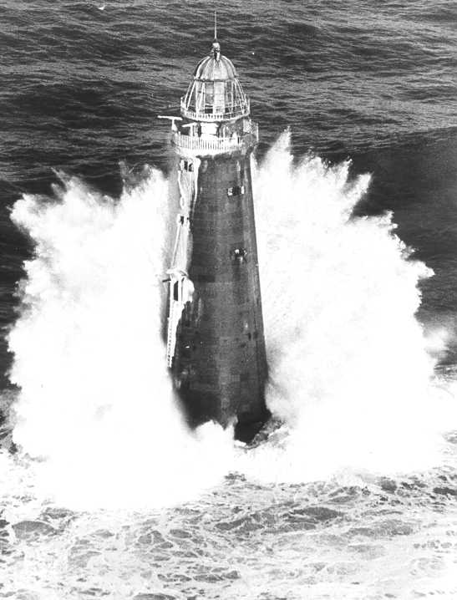



 After the Civil War, the great wooden