
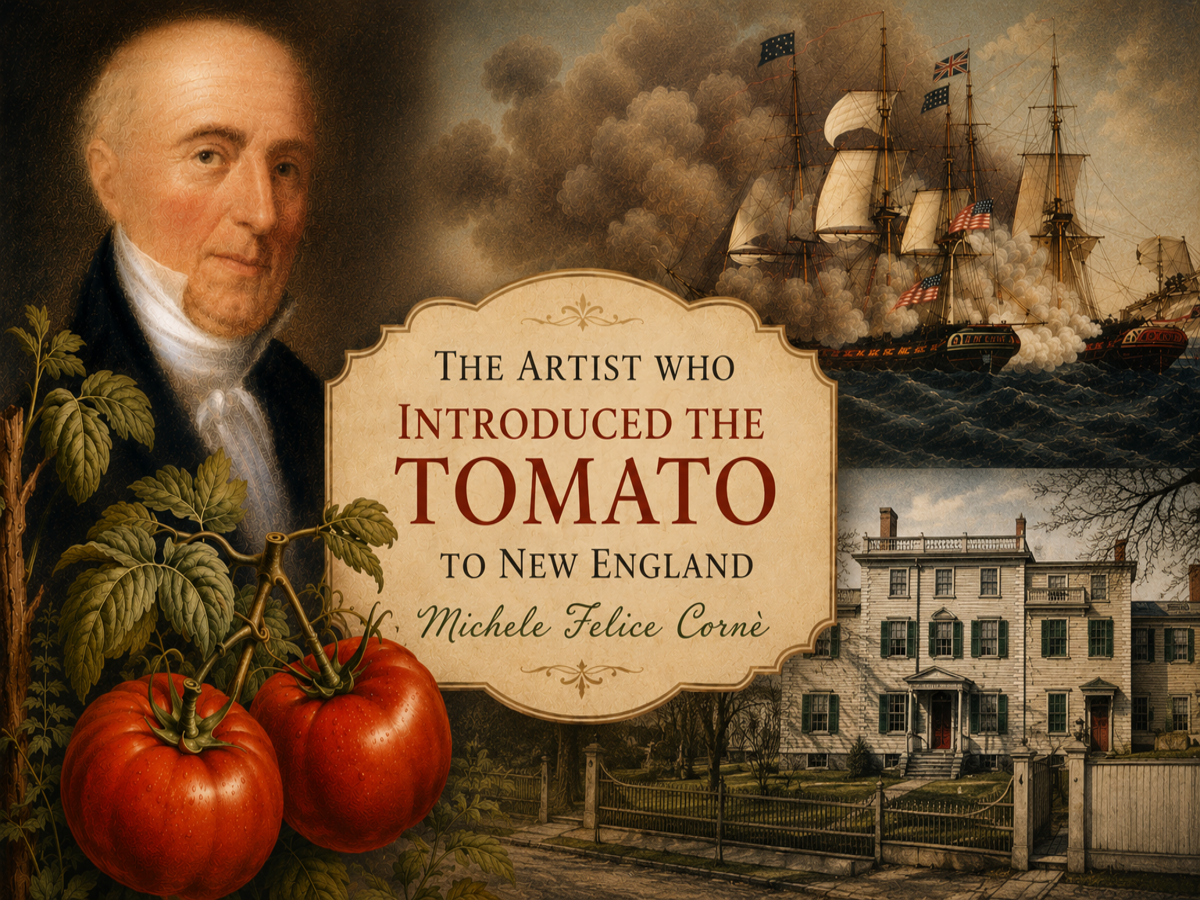
 On a corner of Corne Street in Newport, R.I.’s historic district stands a handsome gray, two-story frame house. Steps lead to a red front door. Up high near the corner of the house, a small plaque reads:
Home of the artist Michel Felice Corne who introduced the tomato into this country.
The plaque is a little misleading. Tomatoes had been cultivated in North America long before Cornè arrived. But he certainly did his part to persuade skeptical New Englanders that the tomato was not poisonous.
And he had an unusual way of making his case: He ate them in public.
Michele Felice Cornè
Cornè was a mysterious, flamboyant and enormously productive artist who arrived in Salem in 1800 as a political refugee from the Neapolitan war that followed the French Revolution. He became one of the most celebrated marine painters in New England, decorated the mansions of wealthy Salem merchants, painted ships by the hundreds and created enormous panoramic paintings of naval battles.
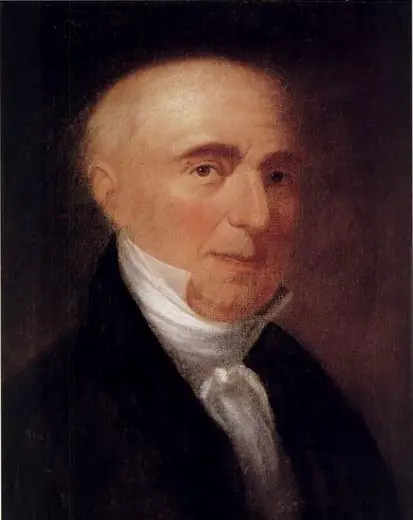
Michele Felice Cornè, self portrait
He also claimed to be a soldier, may have been a nobleman and spoke a mixture of Italian, French and broken English.
Nobody is quite sure who Michel Felice Cornè really was.
But his paintings survive, particularly at the Peabody Essex Museum in Salem, and so does the story of the eccentric artist who spent his final years in Newport cultivating tomatoes and trying to convince his neighbors to eat them.
A Mysterious Arrival in Salem
Cornè was born on the island of Elba sometime around 1757 to a family with French antecedents. Almost everything else about his early life is uncertain.
According to his own account, he served in the Neapolitan Army, deserted and escaped Naples aboard the Mount Vernon, an armed merchant vessel commanded by Elias Haskett Derby Jr., the son of Salem’s wealthiest man.
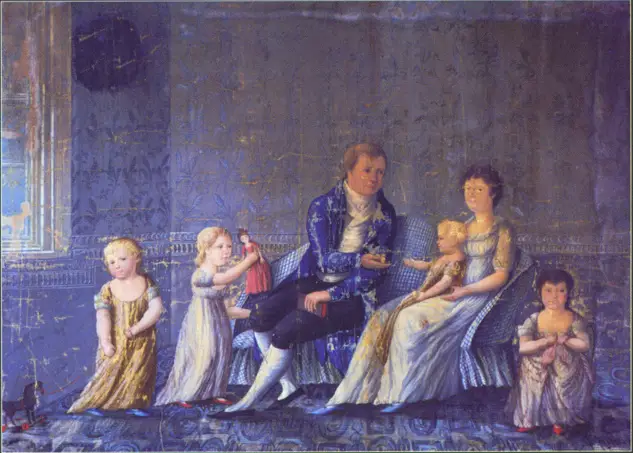
Elias Haskett Derby, Jr., and family. Cornè stayed with them for a while after his arrival in Salem, but he probably did not paint this picture.
Derby brought the refugee home with him.
For his first months in Salem, Derby hosted Cornè in his opulent mansion and introduced him to Salem society. He was about 43 years old, spoke little English and apparently cut an impressive figure. He had large brown eyes beneath heavy eyebrows, a bald pate surrounded by a fringe of hair and an elegant bearing that made him look, according to one description, like a French count in disguise.
Salem turned out to be a terrific place to land.
The city had then reached the height of its prosperity. With about 9,400 residents, it ranked as the sixth-largest city in the United States and one of the country’s most important seaports. Salem merchants had made fortunes in the China trade and cod fishing, and they spent those fortunes on elegant houses. Samuel McIntire designed many of them, creating a district of stately, Federal-style homes.
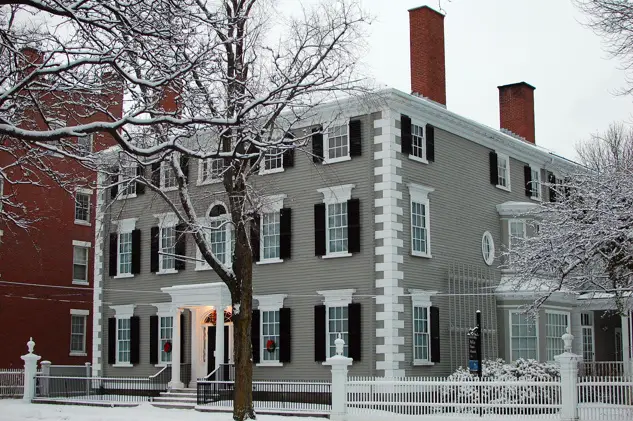
The Stephen Phillips House in Salem, designed by Samuel McIntire
The houses needed decoration. Cornè obliged, often working with McIntire.
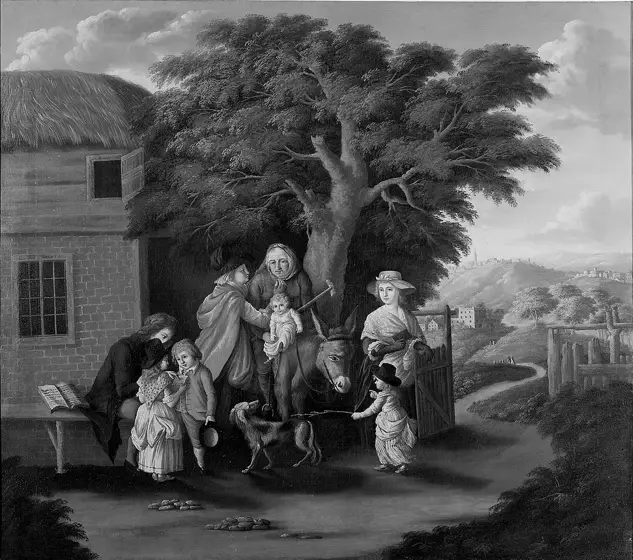
“Sunday Morning,” Corne’s decorative painting for the parlor of the Derby-Robers house, built for Elizabeth Derby West. Now at the Museum of Fine Arts, Boston
The Painter of Salem’s Ships
Cornè was remarkably versatile, and he worked fast. He painted ships, portraits and landscapes. He decorated houses with murals and pastoral scenes, copied portraits of famous people and illustrated books. And he painted fireboards — decorative panels placed in front of fireplaces — with exotic scenes from around the world.
Between 1800 and 1807, he produced more than 100 paintings in Salem.
His specialty, however, was ships. Cornè became the city’s go-to marine painter. The Rev. William Bentley, who knew him well, recorded his growing reputation in his diary.
“Mr. Corne continues to enjoy his reputation as a painter of ships,” Bentley wrote. “In every house we see the ships of our harbor delineated for those who have navigated them.”
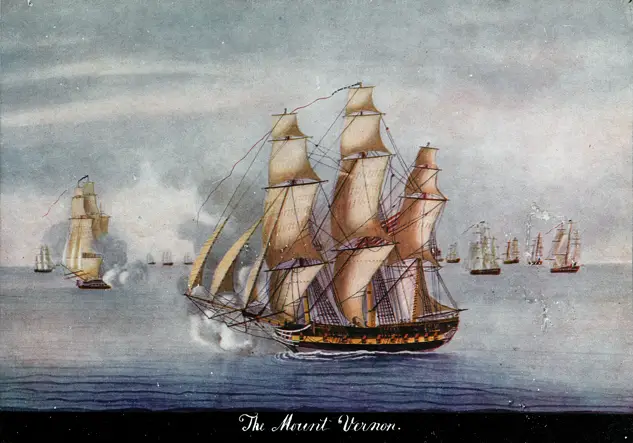
The ship Mount Vernon, owned and commanded by Elias Haskett Derby, Jr. Cornè fled Naples on Mount Vernon and painted it four times.
The East India Marine Society also became an important patron. Founded by 22 sea captains and supercargoes who had sailed beyond the Cape of Good Hope or Cape Horn, the society collected curiosities from around the world. Its collection eventually became part of what is now the Peabody Essex Museum.
The society hired Cornè to decorate fireboards with scenes such as the factories of Canton, China, and the death of Capt. James Cook.
Cornè was considered the finest marine painter of his day in America. Art historians credit Corne with helping introduce Italian techniques of seascape painting to America. The Peabody Essex Museum now has about 50 of his works, including paintings of naval battles, seascapes, ships, a Native encampment and Capt. Cook.

Native Encampment by Michele Felice Corne, after Giovanni Battista Cipriani, based on a watercolor by Alexander Buchan, 1804, oil on wood panel – Peabody Essex Museum
For a Salem ballroom, Cornè covered the floor with classical designs of the Nymphs and Graces, using chalk, charcoal and crayon. Then the party began. The dancers swept his artwork away with their feet and gowns.
Michele Felice Cornè Teaches Salem To Paint
Cornè didn’t just paint for Salem’s wealthy residents. He taught their children. Observed Bentley, “Painting before unknown in its first efforts, is now common among our children,” he wrote.
One of Cornè’s students was George Ropes, who would become one of the region’s most prominent painters.
Cornè had become thoroughly established in Salem when the economy started to collapse.

“The Landing of the Pilgrims,” painted by Cornè around 1805
Michele Felice Cornè Moves to Boston
In 1807, President Thomas Jefferson signed the Embargo Act, prohibiting American ships from trading with foreign ports. Jefferson hoped to keep the United States out of the wars then raging in Europe and elsewhere.
Instead, the embargo started Salem on an economic decline from which it never fully recovered.
Cornè, then about 50, moved to Boston, which suffered from the embargo, but not as badly as Salem.
It proved to be a profitable decision. He decorated the walls of wealthy houses on Summer Street, Temple Place and Beacon Hill. Cornè also painted an enormous 80-foot by 20-foot fresco of the Bay of Naples in Sullivan Dorr’s new mansion in Providence.
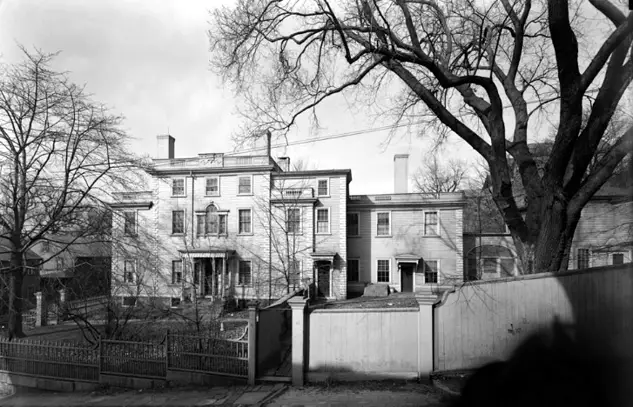
Sullivan Dorr house. Image courtesy Library of Congress,
The work proved lucrative. In 1809, he bought a house and land on Middle Street in Boston’s North End, becoming one of the first Italians to live in what would later become Boston’s Little Italy. He eventually acquired two more properties in the neighborhood.
But Cornè was about to embark on an even more ambitious enterprise. He had arrived at a time when panoramic paintings were hugely popular in Europe and America. They were the IMAX of their day: massive, 360-degree or wide-format paintings, often displayed in rotundas or large halls and charging admission.
The War of 1812
The War of 1812 then gave Cornè something new to paint: American naval victories.
He produced four views of the famous battle between the Constitution and the Guerriere. He exhibited the paintings in cities throughout the Northeast, adding to his tidy little fortune. The paintings were widely reproduced as engravings and sold by booksellers and printers. Others pirated Cornè’s images and put them on mirrors, clocks, hairbrushes and porcelain.
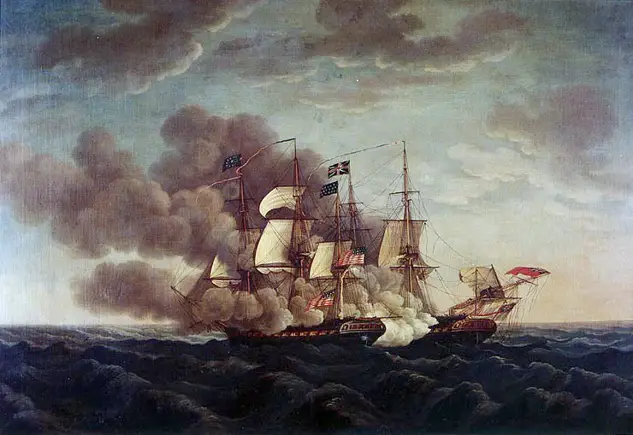
USS Constitution vs. Guerriere by Michele Felice Cornè
But by the end of the war, he was in his 60s. He gradually stopped producing his enormous panoramas and returned to smaller-scale work.
And then there was the other business.
According to Elias Haskett Derby III, Cornè had established a confectionery shop in one of his North End properties.
It would eventually lead him to Newport.
The Tomato Man of Newport
In 1822, Cornè left Boston for Newport.
He said he preferred Newport’s climate for growing tomatoes.
He brought along a 24-year-old Bolognese confectioner named Billy Bottomore, perhaps another Italian political exile. Bottomore became Cornè’s assistant and eventually ran a confectionery shop on the ground floor of Cornè’s Newport home.
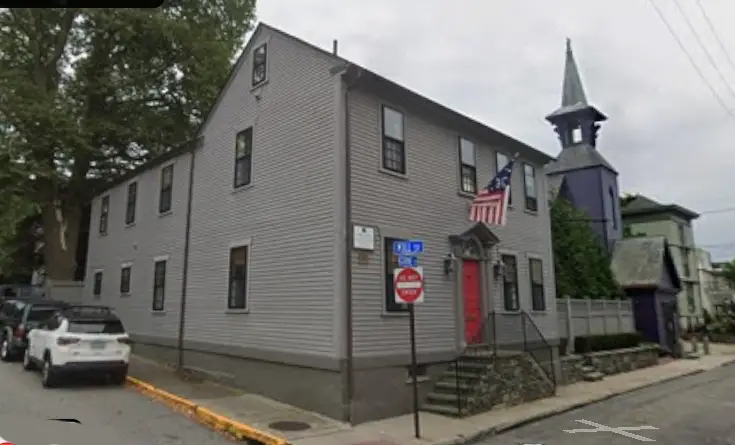
Former home of Michele Felice Cornè. Image courtesy Google Maps.
Cornè bought the property in the fall of 1822 for $7,150. It stood in the center of Newport, just two blocks from the harbor, with a stable on the property.
He converted the stable into his house.
And there he spent the last decades of his life.
Life in Newport
Newport seems to have suited him perfectly. He hunted and fished, cultivated tomatoes, sang old Neapolitan folk songs and entertained his neighbors with stories delivered in an exuberant mixture of Italian, French and broken English.
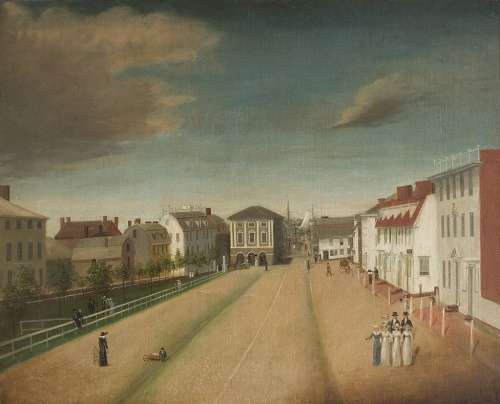
Painting of Newport, R.I., in 1818
He was also an enthusiastic cook.
And above all, he was a missionary for the tomato.
New Englanders had long been suspicious of the red fruit. Some believed it poisonous, perhaps because tomatoes belonged to the nightshade family. Corne was determined to prove them wrong.
He ate tomatoes in public to demonstrate their safety.
Once, he shocked an entire courtroom by eating a bagful.
He also had a favorite argument.
“There is that potato,” he would say. “He grows in the dark, or in the damp cellar with his pale, lank roots; he has no flavor; he lives under ground.”
The tomato, by contrast, grew in sunshine. It had “a fine rosy color” and “an exquisite flavor.” And, Corne insisted, it was wholesome.
When added to soup, he said, it was so delicious that “you relish him and leave nothing in the plate!”

Cornè’s neighbors in Newport, it was said, were more open to the tomato than his neighbors in Salem. He made his tomatoes into delicious soups and sauces. He also made a prized marmalade from Newport quince, and local housewives were willing to pay extravagant prices for it.
Outwitting the Insurance Company
Cornè apparently enjoyed a good bargain as much as a good meal.
At 78, he paid $1,570 for an annuity from the Massachusetts Hospital Life Insurance Company. In return, the company agreed to pay him $100 every six months for the rest of his life.
Corne lived long enough to collect almost twice what he had paid.
He was delighted to have outsmarted the insurance company.
Michel Felice Cornè died in Newport in 1856 at the age of 93.
He left most of his possessions to Billy Bottomore, along with small bequests to friends.
The mysterious refugee who had arrived in Salem more than half a century earlier had lived through the transformation of New England. He had painted its ships, decorated its mansions, chronicled its naval victories and taught its children to paint.
And he had persuaded New Englanders to eat tomatoes, one bite at a time.
* **
 Now available in paperback and as an ebook from the New England Historical Society! A collection of stories about the French people who came to America. Click here to order your copy today!
Images: Elias Haskett Derby and Family By Docspond – Own work, CC BY-SA 3.0, https://commons.wikimedia.org/w/index.php?curid=30725066. Samuel McIntire-designed house By Fletcher6 – Own work, CC BY-SA 3.0, https://commons.wikimedia.org/w/index.php?curid=9022657. Cornè Newport home courtesy Google Maps. Featured image by ChatGPT.