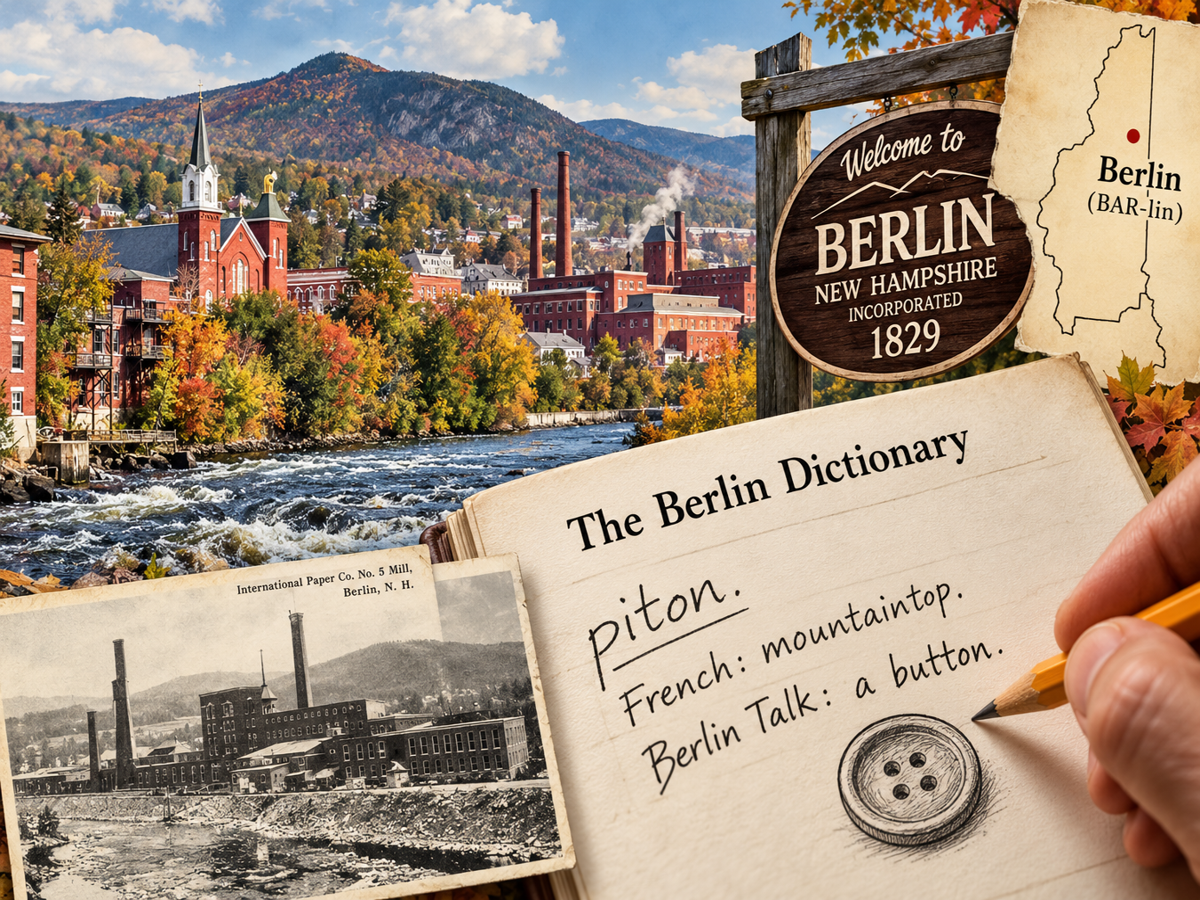
 New England speech is far more complicated than dropped rs and the liberal use of “wicked” as an adjective. The French Canadians who streamed into New England’s mill towns in the mid-19th century created their own vernacular. It still survives in heavily French communities like Berlin, N.H. Berlin (pronounced BAR-lin) even has its own guide to the way locals talk: “The Berlin Dictionary.”
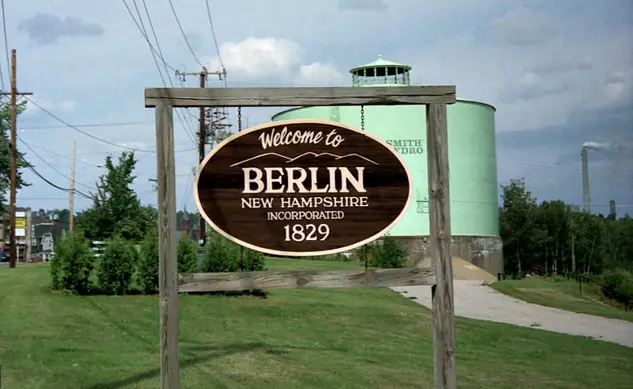
Berlin city welcome sign, ca 1995
For generations, residents of this northern New Hampshire mill town have spoken a particularly American form of French. According to the dictionary, buttocks are fesses, a little smudge or small mess is a mousse and a car is a char.
Such mixing of words would have been frowned upon when French Canadians arrived and formed tightknit communities nicknamed “Little Canadas.” Their language was central to their identity and their religion, and they clung to it tenaciously. They insisted on French-speaking schools and French-speaking priests, to the despair of Catholic bishops and state educators.
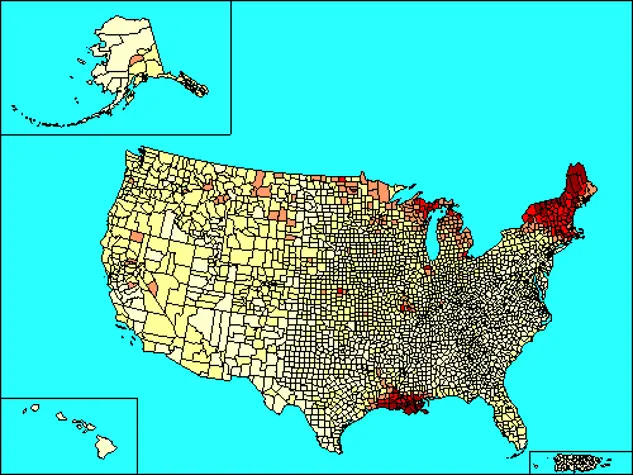
Distribution of French Americans in the United States (c. 2000)
But over time, Quebecois French either returned to their farms in Canada or stayed and adopted American ways. As French and English mixed, they created a distinctive form of Franglais.
New Hampshire Franglais
New Hampshire Franglais includes French-inflected English words that grew out of 19th-century mill work.
In French, the word for “to weave” is tisser. But Francophones in New England were more likely to say weaver — je weave, tu weaves, nous weavons, vous weavez.
Instead of filer, the French word for spinning, they would say spinner.
Some words in Franglais are simply English words with a French inflection: bogue for bug, mél for email and cédérom for CD-ROM.
In Berlin, “Post Office” becomes “la post office.”
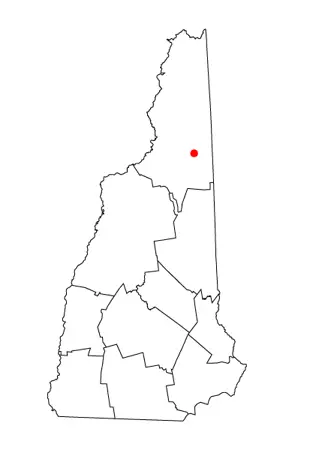
The red dot indicates Berlin’s location in New Hampshire.
Berlin, the largest city in New Hampshire north of Franconia Notch, was once the country’s biggest papermaking center. It also had a shoe factory that made sneakers. The mills have closed, but Berlin talk survives.
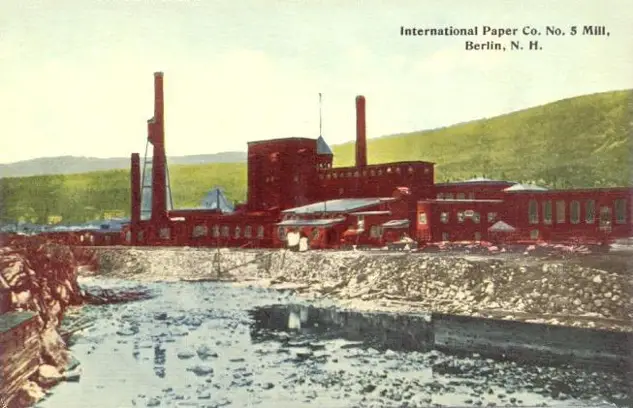
International Paper Co., ca. 1912
The Berlin Dictionary
Rachelle Beaudoin grew up in Berlin and then went to college at the Rhode Island School of Design. She needed an idea for an art project. She told New Hampshire PBS that she got the idea for “The Berlin Dictionary” when she told her husband, “You have some mousse on your shoulder.”
Beaudoin realized then that mousse wasn’t a word commonly used outside Berlin — unless you were ordering dessert.
She began the project by standing in front of the IGA grocery store and asking people about words they used in Berlin. Then the Berlin dictionary got some local publicity, and people started to mail in suggestions. Her fifth-grade teacher, Sister Cecile Morrissette, sent her an entire list of Franglais words.
Ultimately, more than 70 people contributed “Berlin Talk” to the dictionary.
Some loanwords come from standard French but corrupted so they don’t correspond to their original French word.
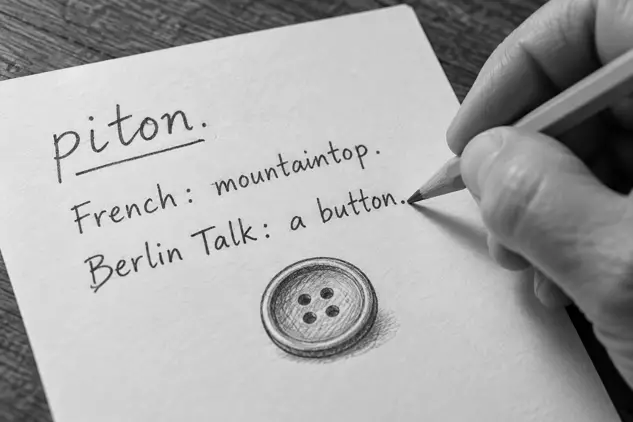
Foufones, for example, refers to female genitalia in French. In Berlin Talk, it’s a cheeky term for buttocks. Similarly, piton means spike or mountain peak. In Berlin, it means button. Tâtones, a noun, comes from the French verb tâtonner, which means to grope, fumble or feel around in the dark. Tâtones is the equivalent of boobs. Does the word cleverly imply an action aimed at it? Only Berliners know.
The Berlin dictionary also includes pronunciations. Hice is ice. You put gaz in your char.
And then there are the expressions that seem to have wandered in from somewhere else entirely. A swamp donkey, for example, is a moose.

A swamp donkey
The book isn’t only about words. It remembers the places and things that made Berlin Berlin.
There’s the Notre Dame Arena, an indoor ice rink built in 1947 for hockey, concerts and local events. There was the Northland Dairy Bar, where you could get a whip, or soft-serve ice cream.
And then there’s Alcohol Springs, where you could set off fireworks, light bonfires and shoot at cans.
The Berlin ‘do made it into the dictionary. A retro hairstyle for women, it remained popular in Berlin long after it had gone out of fashion elsewhere.
Beaudoin also included the UCBU jacket, a common sight in Berlin: a blue windbreaker emblazoned with the United Brotherhood Credit Union logo.
She illustrated the book herself. Her husband jokes that he is the model for fesses. She also adds a little wry wit here and there. In a diagram of tourtière, the traditional French meat pie, she points out ingredients that include pork, spices and “mémère’s (grandmother’s) love.”
The Berlin Dictionary Defines a City
And then there is the Granite Curtain, the mythical boundary separating northern New Hampshire from the more citified southern half of the state.
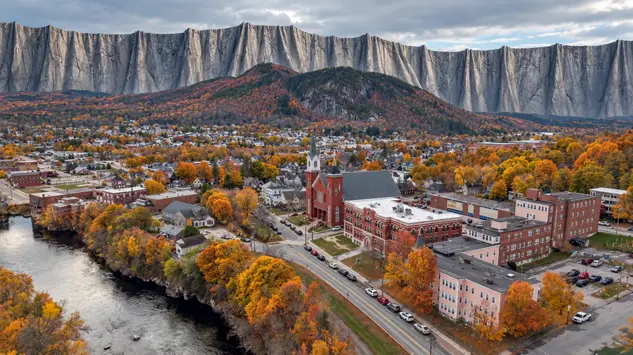
Berlin looking southwest, toward the Granite Curtain
The Berlin Dictionary captures more than an unusual vocabulary. It evokes the people and places that make a community – and the language that grew naturally from the collision of French and English in a New England mill town.
The mills have closed. Much of the old Franco-American world is gone, too.
But in Berlin, you can still find it in the words.
***
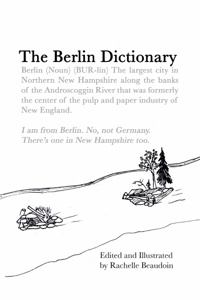
Buy your own copy of “The Berlin Dictionary” by clicking on the image.
Images: Berlin sign: By Stefan Fussan, CC BY-SA 3.0,, https://commons.wikimedia.org/w/index.php?curid=22674187. Map of French in America By [2] – [1], CC BY-SA 3.0, https://commons.wikimedia.org/w/index.php?curid=2352386. Berlin looking southwest By Ascended Dreamer – Own work, CC BY 4.0, https://commons.wikimedia.org/w/index.php?curid=177792912. Moose by USDA Forest Service. Featured image ChatGPT and By The original uploader was Americanadian 8 at English Wikipedia. – Transferred from en.wikipedia to Commons by harfang., Attribution, https://commons.wikimedia.org/w/index.php?curid=12413556.
Watch Rachelle Beaudoin’s interview with New Hampshire PBS here.